Archive | Journalism RSS feed for this section

What I Learned About Theatre Criticism in 2012

27 Dec

The Critic

This year has really flown by. It seems like last week I was preparing for the Fringe and now, suddenly, here I am, sitting in my living room, surrounded by Christmas chocolates, wondering what the Hell happened this year. So, in the spirit of reflection, procrastination and a slice of goodwill, here are the vital lessons I learned about theatre criticism this year.

You Will Never Be Popular

There’s one thing I can confidently say about being a theatre critic; you will have  a very interesting relationship with those around you. Directors, actors, the public and even theatre FOH staff may not like you. Unless you’ve done something really personal to offend them, don’t sweat it, this is part of the job. If you write something people agree with, they will celebrate you; if you write a piece that they disagree with, then they will probably dismiss you. Your name will be celebrated by some, but unfortunately, it will become mud in some circles – accept it, wear it as a badge of honour, but don’t let it get you down.

Arguments on Twitter Are Never a Good Idea

I love Twitter – it’s probably my favourite social network – and while I don’t update my Twitter feed daily, I’m on the site every day, sometimes several times a day. But, like social networks, it has its downside, in fact, it has many downsides at times.  The 140 character limit of a tweet can be frustratingly limited, and we’re all guilty of leaping to the wrong conclusions because of one misunderstood tweet from time to time. So, even though so-called ‘Twitter spats’ can be very, very funny to read, they are nowhere as fun to be involved in – especially if you’re on the receiving end of another person’s unrestrained and completely unexpected bile. If you find yourself being drawn into a Twitter spat, don’t rise to anything, keep a clear head, and a sense of humour.

Nasty Critics Get Nowhere

Have you ever had to work with, or had the misfortune of being around a nasty person? Someone who thought nothing of being rude about other people in order to make themselves seem better by comparison? Well, some people seem to think that this is the way forward in theatre criticism. All too often, I have seen new critics attempt to ruffle feathers by writing very harsh, or downright rude reviews – this doesn’t get you very far, it gives you a bad reputation, and it makes you seem bitter. Don’t do this. The way to make your mark is by writing good reviews and being a reliable writer, you want to make friends and influence people, not be rude and alienate them.

Other Critics Will Irritate You

Believe it or not, critics are people too. And just like every other human beings, we are as irrational and emotional and as fallible as everyone else on the planet. This year was the year that I really managed to get out there and meet lots of critics; from established critics, to brand new critics, to up-and-coming critics, and I learned something new from all of them. However, as with every vocation, it’s almost impossible to get on with everyone, and some critics will naturally clash. Why? Because we are human; we share our opinions, we don’t always agree with each other’s opinions, and we have to work together in very confined spaces. So, accept that people will annoy you, and accept that you probably annoy other people too, and for the sake of a quiet life, try to avoid the ones you don’t get on with, they’re probably not really worth getting annoyed about.

Content is King

Sure, some publications will get read regardless of the quality of their content; perhaps the best example of this is The Daily Mail, but please excuse the cliché for a moment, because content is king for critics. We have to get our facts right first time, we must be impartial, fair, and we have to make our points with care our signature style. Everyone’s got a different way of writing, and that’s what’s really beautiful about the critical game – we’re all very distinctive in our own way. But remember, when writing reviews to research the production, question its themes and direction and write well. Believe me, editors and readers always remember the critics that write well.

Online Publications Will Be the Future (In the Future)

The people that lament the apparent death of print journalism (see below) and it is true that the industry is losing more money every year; we haven’t quite worked out how to make money from online journalism just yet. Yes, some publications, like The Times, have a paywall, and Newsweek recently ended their print edition to go online only, but the recent death of The Daily,Rupert Murdoch’s paid news app for the iPadproves that while demand for quality online journalism is high, we haven’t quite found a way to make real, sustainable and regular money from it.

Print is Not Dead

Just a few years ago, traditional print journalism was in its prime, and online journalism was seen as more of a support to the print format. Now, of course, online has overtaken print, and many commentators, pundits, journalists and writers have been quick to cry that print journalism, for the most part, is dead. I disagree, there is still a market for print journalism – a lot of magazines can only work in the print format – and a lot of people prefer them. It’s true, publishers, even some leading ones, are losing money – but the presses are still printing our daily, weekly and monthly magazines. In fact, until every company stops churning out a print version of their publication, then the medium is very much alive.

Know Your Worth

When you take your first wobbly steps on the sticky path towards becoming a recognised, respected and paid theatre critic, you will have to do some work for free. This is a great way to start building up your portfolio and getting your name out there, and the good thing about building up your portfolio this way, is that there are always lots of websites looking for voluntary writers. However, the bad thing about this situation is that there are always websites looking for unpaid writers. Like I said before, we’re still trying to find a way to make money from online journalism, and so, many websites and editors can’t pay their writers, because there is no money. This is true for a number of sites, but some sites can and do, pay their writers, but often use voluntary writers too. It’s important to know your worth, though, and don’t get stuck doing unpaid work for years and years or for the sake of ‘getting a link back to your blog’ or ‘having your name published’. Get some writing work, get some experience, and then start looking for ways to get money for your work if you can.

The Joy of Rejection in Journalism

2 Dec

Journalism Rejection

When I was 16, I was dumped by my then-boyfriend via text message. This was not just any text message. It was a three-part text message, in which parts one and three arrived promptly, but part two, which was, incidentally, the most important part of the sorry texts (it said why I was getting dumped, but I can’t remember his reasoning now) arrived three hours later. I was completely crushed at the time, and while I can laugh about the entire situation now (dumped via text message? I mean, really?) my work as a journalist had re-acquainted me with the sometimes harsh realities of rejection.

I’m now much older, and a little bit wiser than I was back then, but now I work in journalism, and rejection is part of the job description. Because freelance journalists spent most (read all) of their time pitching to editors, and perhaps even applying for other journalism jobs, they will have had their pitches and applications rejected a lot more than you think they might. Whether a journalist is established in their field or not, they will still get their ideas and work rejected by editors on a weekly, or perhaps even a daily basis.

Having a pitch rejected can at first feel like the end of the world; you’ve worked hard on an idea, or an application, sourced the right publication and pitched your idea for an article in a clear and professional way. Or in the case of applying for a job, provided lots of relevant information and previous work in the job application. However, having a pitch rejected is most definitely not the end of the world, and once it happens to you a few more times, it gets easier. I’m not saying that you are going to develop a rhino skin overnight, but remember that rejection is something that unites a lot of industries, from journalism, to writing, to design, to acting, dancing, music and much, much more.

So how do you deal with rejection? The writer and journalist, Kirsty Logan, wrote a few choice words about having her work rejected in her IdeasTap column in the summer, and they are words that I have decided to live by. I would highly recommend reading her piece and her other work if you get the chance, but the crux of her argument is this; rejection in the writing industry is inevitable, so we should learn to embrace it, and see it as an indicator that we are seizing relevant opportunities.

To Kirsty’s words of wisdom, I would add the following advice:

  • It’s not you that they are rejecting

Try not to take the rejection personally; the editor you are pitching or applying to probably doesn’t know you. They are only judging your writing, not your character.

  • All editors are different

You could work with one editor that loves your voice, your work and agrees with everything you have to say. Then you could work with one that just isn’t that into your writing style.

  • There wasn’t a space for your story

Even if you pitch the right publication or editor, your story might just not suit them at that time. They could even have run a similar story recently, and don’t want to revisit the subject. Don’t panic, this happens more than you might think.

  • Ask for feedback – if you got a response

Most editors will give you a reason why they didn’t commission you, or why they didn’t invite you for an interview, but if they don’t, ask for feedback, especially if you have applied for a job.

However, some publications don’t respond to job applicants, who could benefit from feedback on their application. But when they do, it can be invaluable, in fact, here’s an example of when I did ask for feedback on two separate job applications, one year apart, for the same magazine.

Last year I applied for the role of Assistant Editor at an Edinburgh Fringe publication that I had written for previously in 2010. I didn’t get the job, but when the editor of the publication emailed me to let me know, I responded and asked if they had any writing jobs available. They did, and I built up a rapport with both the editor and assistant editor, and I ended up writing for them, plus taking on extra commissions when they asked.

This year, I applied to write for the same Edinburgh Fringe publication, and because of the amount of work I put in the year before, I was hopeful that I would get more work with them. However, the people I had worked with previously were no longer working there, meaning that the editorial team were almost all brand new.

My application was refused this year, and while the new editor was very polite in all correspondence, when I asked for feedback, they said that I needed to “…build up my writing portfolio, as that was what we are looking for.” Considering my past work for the publication, my existing work within the Scottish theatre community and the fact that this was the fourth Edinburgh Festival Fringe I was going to review at, this rejection was tough – I had a very strong portfolio. I didn’t respond to the editor, because they had made up their mind that I wouldn’t be writing for them this year. But like that ex that dumped me by text message, this is another experience to learn from – not all editors like my writing style, and that’s ok.

So, to all you young creative types, I say this: we’ve all faced rejection, we will continue to face rejection, the trick is how to deal with it; how to learn to roll with the punches and to keep persevering.

The Theatre Critic’s Guide to Life

24 Nov

Do you want to be a theatre critic? Do you have dreams of visiting local, national or even international theatres and writing about what you see? You do? Well, that’s great, it really is. But first of all, I need to give you some advice to get you through the first few years of reviewing.

You Are Going to Miss a Few Meals

I know, everyone gets hungry, but one thing that unites all critics in all forms of arts criticism, is our poor eating habits. Running from show to show, or legging it from your day job early in order to jump on a train to take you to a theatre in another city, leaves you with very little time to grab something to eat.

Food in train stations, as we all know, is far too expensive, so try not to waste your money on sweaty cheese sandwiches and lacklustre pasta salads from well-known chain stores, and bring something with you. A packed lunch (or dinner) may seem a bit naff, but trust me, when you’re on a train, with no money and horrendous stomach cramps after not having eaten anything for the best part of a day, you will thank yourself for making that packed lunch. Trust me.

You May Not Always Want to Write

It’s a sad fact of any writer’s life that there will be days when they find that they have nothing to say about the show that they’ve just seen. It happens to us all. It could be that the production didn’t inspire you, it could be that you thought the piece was pretty average, or it could be that you’re just having a bad day. When this happens, don’t panic, you are by no means alone, calm down, give yourself a break for an hour, and find something to say. Never forget that deadlines can be a source of great inspiration, and desperation.

You Will Suffer a Crisis of Confidence

At several points in my writing career, I have wondered if anyone out there actually reads my reviews, or finds what I say interesting. When I started work as the The Journal‘s Theatre Editor in 2009, I never got any comments on my reviews, bar spam for, oh, I don’t know, handbags, or shoes, and so, I convinced myself that nobody, absolutely nobody, was reading what I was writing. I know now that this wasn’t true; my Dad was reading my reviews, as were other people; they just weren’t commenting on them. Don’t mistake a lack of comments for a lack of interest.

You Will Meet Obnoxious People

Obnoxious people are everywhere, but when you meet one in the theatre world, it can seem impossible to escape from their self-indulgent behaviour and general arrogance. It’s an unfortunate fact of life that not every person you’ll meet will be a nice person; you just have to deal with this. You might meet a particularly unpleasant critic or two, you might somehow end up on some actor or director’s kill list for writing a negative review, but learn to laugh at these people, having a sense of humour when reviewing is vital.

Not Everyone Will Agree With You 

You could absolutely hate a show, you could write and publish a very negative review, but find that someone else you reviewed it on the same night absolutely loved it. This is the magic of reviewing; having a difference of opinion, and this is what sparks most spats between critics and directors/producers/actors and the like. If someone disagrees with you, great, we live in a democracy where people can voice their opinions freely, accept it, after all, that’s why you are free to express your opinions.

However, if the person, or people who disagree with your review start resorting to personal attacks on you, your writing, your character, or your publication, when responding to your review, leave it. Don’t answer back – you will be surprised how many of these commenters are connected to the show, either because they’re in it, or because they know someone who is. I’ve seen PR agencies for shows writing abusive comments under reviews – and what trapped them was their IP address. So please, for your own sanity, don’t feed the trolls.

You Will Make Mistakes, But You Must Learn From Them

In an ideal world, every journalist would get their copy right every time; every piece of information would be correct and verified, every quote would be correctly attributed and every actor name would be spelt correctly. But, this doesn’t always happen, and tiredness, deadlines and other factors can seriously affect the quality of a critic’s copy.

So, accept that at some point you will make a mistake, and when you do, learn from it. Because trust me, the first time you realise that you misspelt an actor/director’s name in your review, you will never, ever forget that horrible sinking feeling.

Some People Will Do Anything to Discredit You

The sad fact of reviewing is that people only like critics when they agree with or enjoy what they have written. The rest of the time, our work can be so easily dismissed by those who disagree with us. Don’t be surprised to find that some people will do anything to attempt to discredit your review, such as go through your tweets, find your Facebook profile, question your credentials, your experience and even, your reasons for writing the review.

There have been incidents where false accusations have been made against critics, and two that I know of have involved critics being accused of being drunk while reviewing a certain show. One of these instances involved two critics I know, who had arrived early for a show, and both had a bottle of beer at the theatre bar before the show began. Someone later contacted their editors, and accused them of being drunk in an attempt to discredit their work. This didn’t work, and as we all know, having a single bottle of beer, or glass of wine before a show isn’t illegal, after all, booze is something that comes with most press nights. Just remember that if you want to have a drink on a press night, not to have too many.

You Will Never Stop Learning

I studied theatre for four years at university, I learned so much about theatre from around the world, and I have seen countless productions and performances for the last 5 years. But, like all good critics, I am constantly learning about theatre, reviewing, journalism, in fact, good journalists never stop learning about the field they are working in. Open your mind, keep and open mind, and never stop reading, writing, reviewing and meeting new people in the industry.

You Will Have a Lot of Fun

While reviewing might seem like a thankless task, it really isn’t, after all, you get to experience the good, the bad and the ugly of theatre while witnessing performances and productions that you could be talking about for years to come. Yes, you may come up against some difficult people, and you may have to sit through some terrible, terrible theatre, but there is so much fun to be had as a theatre critic. So, never, ever give up, keep writing, because theatre criticism needs new, fresh, inspiring and knowledgeable writers.

Trash Interviews James Isherwood

12 Nov
Until last week, I hadn’t heard of the food blogger, James Isherwood. But after he published an average review of Claude Bosi’s restaurant Hibiscus, he fell foul of a number of chefs on Twitter. Bosi, and some other leading chefs disagreed with the review, and tweeted their anger at James’ star rating and wording . These tweets were verbally abusive and highly critical of James and his blog, Dining With James, which led him to deactivate his Twitter account for a short time.
After he returned to Twitter, and following my own experience of dealing with a rather disgruntled theatre company, I asked James if he’d like to do an email interview about the situation. He agreed, and here is the interview, republished in full.
Tell me a little bit about yourself – your background, why you decided to start writing about your restaurant experiences, and what kind of criticism you like to read (if any).

It was after I had a fairly poor meal in a London restaurant. I’d started to write the review in my mind and just had to get it all out when I got home.

Why did you begin writing your blog, Dining With James?

I wanted somewhere I could tweet my reviews, I post on Trip Advisor too. I know it’s not really popular, but my own personal blog felt more intimate. It’s also where I could do short interviews with a few chefs.

Your recent review of Hibiscus caused some extreme reactions from well-known chefs – what did you make of their reactions?

It’s odd! So I didn’t like the starter? I gave the rest of the meal a glowing report. The main problem was saying I had enjoyed it to Claude Bosi, but then writing a slightly negative review. How many of us say yes I loved it at the time? Then, of course, all the other chefs joined in. Which has done nothing for their reputation. A lot of people have gone off these chefs. Rightly so. If I had slated the restaurant and called his granny a whore, then I could understand it!

The fallout from the review caused you to leave Twitter very briefly, why did you decide to leave and then reactivate your account?

On day one it [was] just people against me…constantly. I had no support and I was being bad mouthed, so thought I don’t need it and closed my account. Then someone left me a comment saying I should come back and that’s when I started to get some support.

Aside from the chefs’ reactions, what’s been the most memorable reaction you’ve had to the review?

Findus crispy pancakes is something I don’t think I’ll ever escape from!

What do you think Claude Bosi’s problem with the review was? Was it the star rating? Or was it your description of the starter as average?
Probably saying it was average. Don’t get me wrong, if I cook and someone doesn’t like it, I feel bad. 3/5 is not too bad. There have been plenty of other reviewers who have slated the whole restaurant, but because the chef knows me on Twitter he could find me.
Are you going to continue blogging? Has this experience made you wary of restaurant criticism?

It’s certainly made me think about writing a better blog, I just type what I feel at the time, but no, people have to be truthful about how they feel about restaurants.

What advice would you have to any young, or up-and-coming food critics?

Speak the truth! Don’t let loud mouthed, bully boy chefs intimidate you into giving a good review.

Have you had an apology from Bosi or any other chefs who harassed you? Would you want or accept an apology from them?

No not one single apology, If they did give me an apology I’d gladly accept.

Is there anything else you’d like to add?

Some people are saying I called Tom kerridge a fat ****. But that was directed to someone else who called me an equally unpleasant name. I think after being called every name under the sun, I was allowed to reply back. It just got to me after a while. Others are RT’ing when I said my date and myself had a lovely time at Hibiscus. That was me being polite, the fact I didn’t like my starter had never entered my head when I said that!

Seven Tips for the Arts PR

28 Oct

Ah, PR types, press releases, media officers, press offices, I love you all dearly, and I need you in my professional life. But there are certain things I simply cannot abide in arts PR, and they must end, frankly, as they annoy me, and they give PRs a bad name – and there are a lot of good PRs out there that I enjoy very good working relationships with – and I don’t want to lump them into the same category as the bad ones.

So, to be blunt, if you work in arts PR, or if you want to work in the industry, here are some tips from one cynical, hardened arts journalist to you. Pay attention, and we’ll get on just fine.

1. Email the Right Publication

Granted, this may sound like obvious advice, but in reality, emailing the editor of Auto Trader magazine about a new performance of  Othello isn’t going to get you coverage. Granted, that is an extreme example, but it’s important to remember that creating a suitable and relevant list of publications to contact is a good idea. This will involve some work and research on your part, but it will be worth it, so make sure you know what publication to contact for arts coverage, and whether they are relevant to you. For example, if you are trying to drum up media coverage for a final year show at a local arts college, email publications that deal with visual art coverage, never assume that the term ‘arts’ – which usually stands for film, TV, theatre and radio – includes visual art as well. Research, and find out who is best to contact or you will waste your time.

2. Email the Right Person

While time and effort will go into identifying suitable publications to contact, the same amount of time must go into contacting the relevant section editor. While some PRs think it best to contact the Editor-in-Chief, this can be pointless, as the Editor-in-Chief will be busy sorting out the whole paper/magazine/website and not have the time to pass on your email to the relevant section editor. Find out who you need to contact directly, so if you’re representing  a band, find out the name, email address and/or phone number of the music editor. If you’re looking for theatre coverage, contact the theatre editor. If you can’t find an email address for these people, find out if there is an arts editor you can contact, because they will be able to point you in the right direction.

3. Get the Editor’s Name Right

Again, this sounds simple, but you’d be amazed how easy it can be to use the wrong name in email correspondence. During the Fringe I was called many names by PRs and theatre companies in email correspondence. I was referred to as Andrew on more than one occasion, I was usually called John by most people, which was logical, as John Roberts is the founder and Editor-in-Chief of TPR. A very nice sounding man started his email with ‘Hello Ben’, by which I assume he meant Ben Judge, the editor of Fest magazine, although I have never found out if Ben in turn opened an email that enthusiastically cried: ‘Dear Amy’. Another person began their email with ‘Dear Anne’, while some stuck to more formal titles, with Ms Taylor, Miss Taylor and even Mrs Taylor all getting a look in. For future reference, please call me Amy, or Ms Taylor – Mrs Taylor is my mother.

The trick is to make it personal, there’s nothing more disheartening than opening an email that begins with ‘Dear Edinburgh Fringe Reviewer’, ‘Dear Journalist’, ‘Dear Editor’ or my favourite, ‘Dear Writer.’ Find out the editor’s name, spell it right and use it in the email.

4. Remember a PR is an Invitation, Not a Demand

In all email communications, it’s nice to be nice. Introduce yourself to the journalist if you’ve never contacted them before, be conversational, be polite, but don’t forget to tell them precisely why you’ve contacted them. Inform the writer that the reason you’re contacting them is to invite them to review your show/film/album etc. If a journalist sent an unsolicited and pushy email to a PR, that said something along the lines of: ‘What does it take to get a pair of tickets to your show?’ Then, the chances are that the PR might think the journalist, is, to paraphrase, a little bit rude. I’ve had emails from PRs to that effect, that have no greeting, just a demand to ‘come and see our show’, or to insist that I ‘send a reviewer along, because we’ve not had any reviews, yet, and we’re getting a bit pissed off’. Giving your email a title like ‘REVIEWER WANTED’ will not inspire me to send someone along – tell me why you’ve contacted me, be welcoming, make me want to spend what little time I might have in the evening or at the weekend reviewing your work.

5. Answer Your Emails In a Timely Manner

I know journalists can get a little lax with their emails, but while we can only work on that, we need the support of a good PR who responds to our emails quickly. There have been times when I’ve received an invite to a show, and responded asking for tickets for a certain date, only have to follow-up 8 days later when I’ve still not had response from the PR. In one case, I had to email the PR two more times; in the first email I asked for clarification of the press tickets, and in the second email I had to say that I needed a response by a certain date, or I couldn’t confirm that I’d be able to attend. I hated issuing a deadline like that, but it worked.

6. Keep Your Promises

If you state in your PR that you can accommodate a reviewer on any given date or any given venue if the show is touring, then please, stand by that promise. Recently, I received a PR for a show that said reviewers were welcome on any of their tour dates, but when I requested press tickets for a certain date in the run, I was informed that they only wanted reviewers to attend on the opening night, as that was ‘easiest’ for them.

They did offer to see if they could get me tickets for the date and venue that I had requested: “I could try to contact the venue and see what can be done…” but they made it sound it like was such an effort for them, and you know what? I wasn’t asking for the moon on a plate, I was merely requesting what their PR had promised – that any date, and any venue was fine. Don’t make promises that you can’t keep.

7. Communicate, Communicate, Dear God, Communicate

Similarly, I’m hearing more and more stories about critics at smaller publications and websites receiving invites to review work, but when they requested tickets, they were rejected by the PR, as they really wanted reviewers from ‘bigger publications’, such as The Guardian. This is rude. It’s like sending an RSVP to a wedding only for the bride to write to you to tell you that you’re also not welcome on the big day. During the Fringe, one of my writers had a press ticket request turned down by a PR with no reason given – what made this even more irritating was the fact that TPR had reviewed the company in question at several times previously and had given them very positive reviews each time. Always check with the company/band/performer before turning down requests, as they could have good working relationships with a number of writers and editors.

Essentially, if the PR fucks up, it reflects badly on the company that they are representing; don’t be the PR that fucks up.

Trash Interviews Mike Sheer

24 Oct

A few weeks ago, the Canadian comedian, Mike Sheer published a piece on Chortle, in which he discussed rape jokes and whether women can be funny. The piece was meant to be tongue in cheek, and promote debate on attitudes to women in comedy and rape jokes in general. It was not well received by a number of people who read it, and so, after Mike commented on the blog I wrote about the subject, I asked him if he’d be willing to be interviewed via email about the piece, the backlash it created and his thoughts on the whole situation.

He agreed. This is the interview, with Mike’s responses to my questions appearing in full. The only changes I have made is adding anchor links when they were needed.

Tell me a bit about yourself, how you got into comedy, why you came to the UK, etc.

I am a 31 year old Caucasian man born and raised in Toronto, Canada. All my family except my sister and me are from England, so we dodged that bullet. When I started doing comedy, my background was in live music, acting, and writing monologues & horror stories. I ended up at a college in Toronto that had just started a comedy program. I wanted to do sketch comedy and theatre.

I never had plans to be stand up comedian, but it fit in with everything I wanted to do: write, be on stage, travel, anger & disappoint people. Also, the incredible difficulty appealed to me. I remember thinking stand up comedy was perfect because you can do anything you want.

I arrived in the UK to live in 2009 after years of being back and forth between Melbourne and Toronto. I came here because this is supposed to be where you go to do comedy when you’re Canadian and don’t want to live in the US.

When did you first notice comments in the comedy industry about women not being/being funny? 

Within a week of living here. The first things I was told were “women aren’t funny” and “Canadians are funny”. I thought, what about Canadiennes?

My Australian girlfriend who I moved here with was doing a bit of comedy and initially got involved with the Laughing Cows thing in Manchester. I hung out with them one night and heard all about the prejudices.

Obviously, women can be very funny, why do you think comedians are still asking whether women are funny?

First of all, as far as I know it’s not really comedians who are asking it. It’s audience members and bookers. But mainly journalists who think it’s a surefire interesting topic.

I really think to say women aren’t funny you are belying a deeper issue you have with females. Like I said in the article I wrote:

“I hate how they appear to like me and then rarely do. So when one steps behind that microphone, can you blame me for reeling?”

This goes for both sexes. I know women who say women aren’t funny, but then go on to show they have issues with the gender.

The thing is that people judge comedians on physical appearance – whether that means boobs, facial hair, skin colour, whatever. It’s natural. It’s up to the comic whether or not they want to incorporate that in their act. I think a lot of comedy courses now tell you to, but there’s few things as awkward as when a comic rattles off superficial gags about their appearance and no-one cares. This can happen with more urbane crowds. And it’s how I feel when I watch someone. Like, I don’t really give a shit what you look like. I just want to know what’s up with you. If that involves how you’re perspective has been shaped due to your physicality that’s cool, but own it. Don’t make it a gimmick.

I went through a phase where I thought all grossly fat comics were hilarious because the pathos of being that unhealthy and also wanting to comedy was a funny pairing to me. It’s the humanity behind the pretense to humour that I find hilarious. Some of the most poignant, jaw-droppingly hysterical moments in live stand up I’ve seen have been when the mask slips out of place by accident. A lot of comics are able to recreate that but nothing’s funnier then when it happens by mistake.

For example, I will never forget this act that I went to comedy college with. He was a clean-cut suburban boy who really wanted to be a stand up. Week after week he would come up and try to slickly deliver these awful bits about hot dogs and the Backstreet Boys. Then one day he came in all unshaven and told us his girlfriend had split up with him. He went on stage and started ranting away, calling her a “cunt” etc. It was so funny, because you were seeing the real him.

I seem to have really really gone off topic.

What is your opinion on rape jokes? Have ever told one, or would you tell one?

I’m going to give this question a lot more thought than I ever have before, because I’m interested in knowing the answer too.

Okay, after the more thought, here is the answer:

I have a joke that implies I rape a turtle. I have a joke about the tip of my dick getting ripped off like a bottle cap by the teeth of a Scottish woman. When I’m being heckled by a particularly imposing Alpha male figure in the audience I’ll often insinuate I am going to be sexually violent at him, usually with the microphone stand. Or vice versa. Does that count?

One of the things that pisses me off and drove me to write the brilliant piece of damning satire that I did, is that “Rape Joke” has become a meme. We bandy the term around like it can only mean one thing: a whimsical quip regarding the rape of a woman. The kind of thinking that leads us to say “STOP RAPE JOKES”, and the perpetuation of it, is what devalues it as an issue people genuinely have with comedy.

It’s one of those things that’s considered a problem, but is not. It’s a symptom.

Also, if some people want other people to stop making jokes about rape, these people need to come up with a better way than directly complaining about it. The kind of person who make jokes about something like sexual violence is not going to do what they are told, or even asked nicely. I always thought this was obvious, but it’s clearly not.

Anyway, maybe I am wrong here, but I assume when you ask if I tell “rape jokes” you mean jokes about a woman being sexually brutalized? The answer to that is no, I’ve never done that. And no, I wouldn’t sit down with a strong black coffee and rack my brain trying to write one.

When I was doing comedy in Toronto, a “rape joke” would be taken to mean a joke about male-on-male prison rape. Generally the punchline being that it’s instigated by “a big, black guy named Bubba” or some such thing. And no, I’ve never done that joke either.

Do you think rape jokes and jokes about women being funny are acceptable for a comedian to say in 2012?

That’s an interesting question because you used the word “acceptable”.

I’ll put it like this: I wrote an article making fun of attitudes towards the debates of funny women and rape jokes. I’m not sure I would say it, in that I would not do it in my live act. This is mainly because, what are the chances your audience cares/knows about these issues? I wrote it on the internet instead, where it’s more relevant, thinking that it would find its audience, which it did.

As far as it being “acceptable” (I keep putting that words in quotes because that’s what we do when we hate a word but still have to use it, as if we are protecting our other words from it’s horrible presence), I am of a belief that most comedians share: say whatever the fuck you want. As a comedian, it is your right. You’ve earned it. Especially in 2012.

Because, to be a comedian, you will have subjected yourself to the worst of humanity as someone in a weakened position. Nearly every comedian has a tale about being attacked at or after a gig, mostly apropos of nothing. We know what is funny to say and what is just cuntish to say. We know. And we always deal with the consequences – mainly because you have no other choice, but also because that’s part of the arrangement.

So the only time it isn’t “acceptable” to say something as a comedian, is when you are doing it without any aspirations of humour in mind. In those cases you are just a local psychotic (who can also potentially be quite entertaining).

But the ongoing debate about whether or not it’s okay to do is never going to be solved. A lot of comedians that are of a certain ilk, of which I am one, see the world for all its ills all the time. I am constantly seeing the flaws in everything. That’s why we get so defensive and/or reactionary when it’s implied we don’t know what’s “acceptable”, or that we’re being “offensive”.

Why do you think comedians are using rape jokes? And why do they seem to be using them more now?

First of all, there’s the easily adaptable formula of taking something horrible and addressing it in a light-hearted way. This is a fun game to play with a bunch of your idiot friends, but doing it in your act is selling yourself short.

But like I said in the article, there are billions of gigs popping up all over the place. Also, billions of people want to be comics. And good, honest, and/or interesting material is a grinding & risky slog. So people form their act in unison with what they think people will want to hear. And going with the general misogynist tone in some areas can perhaps give birth to the Rape Joke.

Something that the Twitter/blog reaction to my article really drove home for me was the desperation people have for content. Everyone online is trying to build an empire through their blog, loads of comedians are trying the same with Twitter. And me as a spokesperson for misogyny and rape became a solid piece of content that people eagerly latched on to. This is the same thing that shitty comics are doing in shitty towns at shitty gigs all over this shitty world. Using iconic tragedies as content.

Is there a correct way to perform or tell a rape joke, in your opinion?

With an arrow-through-the-ears headband? A Canadian accent? A cheeky wink and a vagina? No, I wouldn’t deign to know the correct way to do anything. However, if you look at Jimmy Carr who does some rape jokes in the classic sense, you should probably do it in front of an audience of thousands who bought tickets to specifically see you.

What inspired you to write that blog post? Was it because of a specific situation, or was it the result of many situations and conversations that you’d witnessed over time?

Yes it was a build-up. Things like how the Australian girlfriend I mentioned earlier made a hilarious & interesting comedian, but was so put-off by the industry that she didn’t want to do it anymore. The weirdness of having quotes by intellectual beacon Christopher Hitchens shoved in my face as unequivocal proof of women’s unfunniness. Online aggressors demanding an end to “rape jokes” and those that engage them. The constant flow of articles pondering women’s funniness written by morons who think it’s an actual subject worthy of study. Feedback from idiots who consider themselves comedy experts because they own a television. Pretty much anyone whose ever analyzed comedy in a destructive way.

Can you tell us what happened with Chortle? Did they approach you and ask to use your blog, or did you approach them?

Chortle provides a free space for people to write articles about comedy. Even though they end up being mostly re-imaginings of the same topics, it’s a great thing for them to do. I’d submitted one once before . I’d sent in another one but was told it was too jokey to put in. When I sent in the Women or Rape article I figured it would be turned away too.

How did you think people would react to your blog? Did you think they would see it as satire?

I had no idea that anyone would see it as anything but satire, but to be completely honest I didn’t really think about it that deeply. I know I’ve just gone on about us comedians being savvy etc. but I didn’t apply all my analytical faculties to this one. It made sense to me, and a couple of other (female) people I sent it to.

As soon as Chortle put it on, I got another email from them saying to look at the outrage on their Twitter timeline. I had a look and was surprised, but thought it was hilarious someone would think anyone would actually mean these things in the way they were written. I went out to do a gig and didn’t get back online until about midnight when I saw the true fury.

Quite a few blogs, and even an online petition, had popped up. As I said before, it’s mostly people trying to brand themselves and be the go-to for insightful opinion on the latest moral scandal. They need content. And if it’s content framed in a context they are secure everyone else believes, all the better.

It was funny seeing people pick apart arguments within my article that were hugely absurd, and posit that I sincerely believed it. Writing a blog decrying me as a misogynist rape fanatic must have been a gloriously easy task. Low effort and huge reward in terms of readership. That’s why I liked your blog, because it wasn’t sensationalist and asked questions.

But I really do think it’s all fair enough. The internet is weird because you can hear everyone’s opinion. In real life, nothing would ever get done if you knew what every single person thought.

What did you think of Chortle’s response to the blog? Do you think Chortle should have used your blog?

Sure, that’s why I sent it to them. I think they had the appropriate response. Chortle – as far as I know – is the brainchild of one man, and he got the joke. So he responded accordingly by saying he got it and there it is.

Did Chortle advise you on how to deal with the fallout from the blog? 

No, they were as surprised by it as I was.

Your blog obviously got a lot of negative coverage, was there any piece of criticism that stayed with you, or anything that you agreed/disagreed with?

The biggest thing I learned was how the internet works. It’s a frontier, and frontiers are always rife with terrifying pack mentality when it comes to justice.

I should have put in a caveat when posting to Chortle. Since the audience was so broad, I guess it did need something to indicate I was joking. Again, I didn’t think of the scope I was reaching, and the possibility of decontextualisation. If it was in my live act, I would have been more careful.

I try very hard to look behind the words people use and see what they really mean, and it’s because of this that I wasn’t bothered by the criticism. A lot of people were quite transparent. They came at me with harsh words, petitions, hashtags like #mikesheerisacunt (which I’d like to keep going) – but it didn’t/doesn’t bother me because it’s not really directed at who I am and what I stand for.

I put out the follow-up article afterwards and some people have said they’re disappointed I had to. But I did it in response to all the women’s groups, rape crisis centres etc who thought it was a serious piece of hate speech. That was something I felt I needed to put right.

Once it became known it was intended as satire, people wanted to stay angry. So it just boiled down to a group of people saying I’m a bad, unfunny writer. My Twitter allies closed ranks and took care of them for me. But surprisingly, there were a few comedians joining in the criticism. I found this odd, because in my experience comedians don’t openly get involved in these things. Oddly enough, I think a lot of those comedians suck and are boring too, but I would never tell them! Why would they need to know that? Even ones who write insipid, cloying articles for free morning newspapers.

Do you think your blog has helped raise awareness of these jokes, or simply made you seem like something you’re not?

It’s hard to say. I wanted to push the arguments about these issues so far that we could move on from them, and I sort of feel like I did that, but as a side effect I became a pariah. It’s funny how we are more keen to target an individual and create a devil out of them than get anywhere with real issues. We are truly a tabloid culture. At the risk of sounding like a negative nelly, I’ve learned that very few people have an interest in accomplishing anything, as our personal hang-ups always get in the way.

The reaction to this was so mixed, in terms of people loving it, hating it, chuckling and moving on, etc. But I got the impression that those who really hated it but knew I’m not a jerk needed it to be a failure. So I got quite a few “sorry you failed, better luck next time” type comments, which I’m happy to play along with.

Now this whole free speech thing has come up, where people are getting arrested for dumb jokes online. And now Frankie Boyle is in court defending his TV show. It’s all so stupid. He’s being called a racist because of things on his show that we’re meant to parody fascist opinions. And he’s coming out about being in anti-racist groups etc. But it’s like that stuff doesn’t matter these days – words speak louder than actions.

Without getting into the free speech topic too much, as it’s quite boring, I have to say that to me part of having it is that it’s self-policing. A lot of people didn’t like what I said, and misinterpreted it, but they came forward and abused me. That’s the way it should be. Real law doesn’t need to be involved

What’s next for you? Are you going to continue blogging, writing online and gigging?

Yeah, I’m going to try to do a lot more of the online article writing thing.

I’m getting told a lot to try to do a stand-up show about this experience, and I’m playing around with that. This year I’ve had a pretty great UK festival run with my solo show Undergod  and am hoping to bring it to Canada in the new year. I’ll be doing the UK festivals next year with something new anyway. The act is always doing something.

Right now I’m also doing a lot of work with my ska band Rags Rudi – we’re recording an EP and gigging around town. It’s great playing with them because you can make people have a great time and never have to explain yourself to those who didn’t. Know what I mean?

Is This Chortle’s Idea of a Joke?

2 Oct

Today, the comedy website Chortle (which I won’t link to, because frankly they’ve had enough traffic for one day) published a piece in their Correspondents section – part of their website where comedians write “first person opinion pieces” about issues affecting comedy – by a comedian called Mike Sheer. The blog, (which again I won’t link to, because it’s had enough hits for one day) was called ‘Women or Rape: Which is Less Funny?’ and was seemingly, Sheer’s attempt to answer, once and for all, that age-old question of whether women are funny, by comparing women to every Fringe comedian’s joke du jour: rape.

In the piece, Sheer decided that while women aren’t really that funny, an idea he explained by using several incredibly humourless and brutally offensive anecdotes about women getting an easier time of it because they’re “weak and soft”, they were less funny than rape jokes. Although, he was in support of rape jokes in general as the censorship of them, according to Sheer, is “abhorrent”.

The piece, as you can imagine, was not received very well online, and on Twitter at least, people are already announcing that Sheer’s career is over, and Chortle has come under heavy criticism for publishing the article. However, Sheer has had some support, not least from fellow comedian James W. Smith who revealed in his blog that the piece originally appeared on Sheer’s personal blog, and was republished by Chortle. Smith’s blog actually gets to the real crux of the issues with Sheer’s piece, which is that while he knows him personally and also his comedy style, Chortle should not have republished his work.

Herein lies on of the many problems with Sheer’s article. The internet, unlike the human mind, doesn’t come with a sarcasm alarm; no klaxon sounds in our ears when we read something that the author has intended as a joke, albeit a very unfunny and sexist one. The fact that Sheer is not very well-known, and his views on the subjects of rape and women appear to be so extreme means that a lot of people are going to read what he’s written as opinion, not humour. Additionally, when you write such sexist material you’re going to elicit a response that you haven’t prepared for.

However ‘hilarious’ Sheer’s intentions might have been when he wrote his article, Chortle’s decision to repost it is what really concerns me, as does their response to the online reaction the piece has caused. Chortle’s Editor, Steve Bennett was quick to defend the article saying “…we’re not about causing needless offence” before stating that the piece was about making fun of issues of censorship and arguments about what is appropriate inside the comedy circuit. However, Bennett didn’t apologise and he ended his statement by admitting that he found the negative reaction funny, saying: ” The fact people have taken this article seriously might be the funniest thing I’ve ever heard, outside a fart.”

Whether Sheer’s piece is simply a poor attempt at satire, or a platform for him to make a better name for himself by being controversial, the fact remains that the continuing popularity of rape jokes in the national and international comedy circuit must be addressed. Bennett’s defence of Sheer’s work, which veers on the standard response of “It was just a joke” reveals a lack of understanding and empathy for the power that any writing about rape has on people, or the gravity of the depth of feeling towards the use of rape jokes in the comedy circuit.

Put simply, any fool could make a rape joke, and it seems like most fools do, especially if they are paid to go on a stage and say it in front of hundreds of people. However, the way many comedians use rape as a source of their jokes doesn’t do anything for the crime or its victims. Recent incidents, such as when the American comedian Daniel Tosh, who dealt with a women in the audience who disagreed his statement that “rape jokes are always funny” by saying: “Wouldn’t it be funny if that girl got raped by like, five guys right now? Like right now? What if a bunch of guys just raped her…” reveal that more and more comedians view rape victims as something to be laughed at. In Tosh’s case, he used the threat of gang rape; a brutal and repugnant act of sexual violence, in order to silence a woman who merely disagreed with his material.

Rape is a violent crime, it is not about sex or desire, it’s about power and control, it’s about one or more people violating another human being in the most despicable and inhumane way. We must find a way to talk about it more, to help end the stigma that exists in our society that stops victims for coming forward out of fear of not being believed. The same stigma that vilifies the victim through the use of cruel practises like victim blaming, where society blames the rape victim for any reason, such as walking home late at night, being in a relationship with the rapist, being drunk, having had a drink, or simply for wearing a short skirt. Telling rape jokes like the ones that Tosh et al have championed is not the way. If anything, the rapists are the ones most deserving of a dose of satire, of jokes and of laughter because they have to prey on others for their own twisted and pathetic pleasure.

So what next for Sheer and Chortle? While it looks like they tried to do something different with this piece, they’ve offended a lot of people, regardless of their intent. An apology issued by both Sheer and Chortle would go some way to make up for the offence caused by the article, as would make a donation to a rape charity or a local rape crisis centre. In the meantime we can only wait and see what happens next.

Six Tips for the Young Arts Journalist

30 Sep

Image courtesy of NS Newsflash, under a Creative Commons Licence

So, you want to be an arts journalist. You want to write about the arts, interview influential people and perhaps even travel the world in search of all things culture-related. So, before you go out into the world, and start trying to make a name for yourself as a promising new writer, here are a few things that you need to know. I know that some of them sound very obvious to most of us, but believe me, some people need to be told these things.

Leave Your Ego At The Door

Even if you’ve studied journalism in some form already, had work experience at a paper, or even, managed the holy grail and got some money for your writing, your ego can and will be your downfall. Writing is obviously a very useful talent to have in the industry, but listening and having respect for others is too.

This means that when your editor asks you for something, you do it.

This means that if you attend a show, gig or screening, you are a representative of your publication, you need to be on your best behaviour.

This also means that you should be polite to people you deal with, such as press officers PRs, editors and other writers. Being rude will give you a bad reputation, and also make people less likely to want to work with you.

Be Persistent

In journalism, persistence is key. Editors are very, very busy people; our inboxes fill up quickly with emails, and so if you’ve emailed someone looking for work, or pitching a piece, don’t be afraid to send them a follow-up email. The same goes for PRs and press officers; if you’re waiting on a response to a ticket request, get back in touch and ask for confirmation.

It once took me 17 emails and a phone call to arrange and confirm an email with a director, so if you don’t receive a response to your initial email, keep trying.

Listen to Feedback

Some editors will give you feedback on your work, others will not. If you are lucky enough to receive feedback on your copy, then listen to it. As an editor, having a writer that refuses to listen to feedback about their work, and who continues to make the same errors over and over again, is extremely frustrating.

Editors don’t have the time to keep correcting the same errors in a writer’s copy time and time again; they want writers that will listen to feedback.

Be Reliable

Like persistence, reliability is another skill that any young journalist should have. This means turning to shows/gigs/events/interviews on time, and then submitting copy by the deadline.

Turning up to something that you are meant to cover late, or indeed, failing to turn up at all destroys any trust your editor may have in you. Similarly, attending an event and then not submitting copy will blacklist you from that publication, and perhaps others.

Editors like to talk to one another, and if you behave poorly for one editor, others will hear about it, trust me.

Pay Attention to the Word Count

Word counts exist for a reason, and for print publications, they exist in order to make sure that the piece will fit into its allocated space without messing up the entire page its set to be printed on.

Although online journalism is obviously different to print, word counts are just as important for online publications as well. This means that you stick to the word count, so if an editor as for a 300 word review, the review needs to be 300 words, not 200, and most certainly not 600.

Speaking from an editor’s perspective, receiving an email that begins with the words “I know it’s over the word count but…” is infuriating. Learn how to self-edit, it’s a skill that will never leave you once you’ve mastered it. So don’t be lazy, stick to the word count.

Never, Ever Plagiarise 

Plagiarism is another word for ripping off or copying other people’s work. Plagiarism, while not illegal, is highly immoral and a very serious problem in journalism. Being caught plagiarising can and will end your career as a journalist, as no editor or publication will work with any journalist who is caught passing off other people’s work as their own.

It’s a despicable and unforgivable thing to do, and there is never any excuse for it. Do yourself a favour, and never let yourself and your publication down by doing it – ignorance is not an excuse.

Again, I realise I may be preaching to the converted here, but spreading the word about these problems will help tackle the common issues that young journalists and their editors will face.

Of Pen Names and Pseudonyms

28 Sep

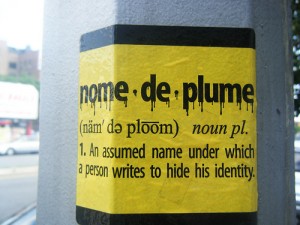
In the age of new media, how do we value anonymity? Does using a pen name devalue journalism? The recent publication of a review written by a critic using a pen name ignited a debate between critics and performers on the need for pseudonyms in criticism. Some said that anonymous reviews “…completely negate the credibility of your magazine”, whilst others dismissed the practice as “cowardly”.

So, are anonymous reviews ever okay? Yes. I believe that using a false name does not mean a writer is peddling false information or an untruthful review, and using an assumed name doesn’t mean that a writer doesn’t stand by their work. In fact, I have two writers that use pen names as a way to separate their reviewing lives from their everyday lives and future careers. I understand why they do this, and I’ve always been very open with venues and editors about their assumed names.

A professional writer’s reasons for choosing anonymity over a recognisable byline aren’t due to nefarious reasons or ulterior motives. Pen names have long been part of the journalism industry; in the 18th and 19th century, it was very common for journalists to produce pieces under a different name. In fact, George Bernard Shaw began his career working as a music critic for The Star, using the pseudonym, Corno di Bassetto. Similarly, as a young student, Arthur Miller wrote criticism under the name Matt Wayne and Anthony Burgess was a pseudonym based on the writer’s birth name, John Anthony Burgess Wilson.

Obviously the growth of the internet has made anonymous critics, whether they are existing critics or the public, commonplace However, those that choose not to reveal their names when writing reviews aren’t trolling. Their lack of identity doesn’t mean that they lack morals or basic journalism training; their reasons for staying anonymous are many and are often very personal.

For example, a writer might choose to write under another name because an established journalist already uses their name. I’ve never used a pen name, however, in the future, I might have to use one, because there is already a journalist called Amy Taylor, and using another name, or simply using my initials might end any confusion between the two of us.

Another reason would be that the writer has a name that is hard to pronounce or spell, so simplifying it would make them easier to search for online, and also make their name much easier for editors and readers alike to remember. Or a writer may want to give themselves a new name in order to improve or make their birth name more suitable to their vocation. After all, would you rather read an essay by an author called Thomas Lanier Williams III or Tennessee Williams?

Some writers choose a pen name to end the limitations of their name, or begin to write pieces in a different style, or about a different subject. In 1977, Steven King, fearing he would oversaturate the horror novel market by publishing too many books in one year, began writing  under the pseudonym Richard Bachman. His alter ego was ‘killed off’ very suddenly in 1985, when an intrepid book store clerk uncovered Bachman’s real identity.

Similarly, Iain Banks, who wrote the horror novels The Wasp Factory and The Crow Road, uses the name Iain M. Banks for his science fiction novels, in order to define his separate writing identities.

Anonymity might be part of their work, such as if the writer regularly writes about real life stories. For example, Gizmodo UK’s police blogger uses the pseudonym Matt Delito when writing about his job in the police force. While he never names his colleagues or the people he arrests in his work, his position has to be anonymous in order to protect him and the cases he works on. If he were to be ‘unmasked’ his job, his livelihood, his cases and perhaps even his life could be put in danger. Gizmodo informs the reader that Delito is a pseudonym via a disclaimer, as do most publications that carry this type of content.

In the world of criticism, content is king. But are we putting too much emphasis on bylines? Are we putting author credit above the quality of our own content? Producing a review that is rich, readable and above all authoritative, is what every critic strives for, and indeed, it’s what every reader wants to see. Consistency, like writing high-quality and engaging content is also vital. If a writer uses just one pseudonym regularly throughout their career, their pen name will be established, and that name will become a familiar feature in the industry that they write about.

Some writers choose to be transparent about their pen names, such as the novelist Nora Roberts, has also written novels under the name J.D. Robb. Her tactic of being open about her pen name makes her seem more versatile to her readers. But for some critics and other writers, transparency is not something that they can commit to, for various reasons. Anonymity can be and is a very valuable tool for some critics, for some it is a way of getting noticed, and for others, it’s simply a way of keeping a part of their lives personal.

So do anonymous reviews ruin a magazine’s reputation? It depends on the content, and the writer’s reasons for being anonymous. But in terms of theatre criticism, it would take a very, very poorly written review written by a critic under a pseudonym to do that. As for them being cowardly, with journalism becoming tougher to get into, more and more writers may take on part-time, or perhaps even full-time work in order to make ends meet. Are they cowardly, or a fact of life as a writer? Are writers truly aware of how prevalent pen names are in the creative industries? Perhaps we should all start being more transparent about the use of pen names in journalism, in order to end the stigma that seems to surround them in the 21st century? We are, as a species, naturally suspicious of secrecy, but we need to embrace the pseudonym once again, especially in journalism, because pen names aren’t just part of the industry, they’re one of the many reasons that journalism has thrived.

Theatre Criticism Will Eat Itself

27 Sep

The last few weeks have been really very interesting. I published a blog post called ‘Trash and the Libel Case, or How to Piss Off a Theatre Critic’ on Sunday evening. The blog described my treatment at the hands of a difficult company that performed at the Fringe last month, and for many reasons, I decided not to name the company involved. By Monday evening, thanks to retweets and word of mouth, the blog had been read thousands of times, and many people, from performers, to fellow critics to PRs and journalists had contacted me to tell me their thoughts on the blog, and share similar experiences.

I was and I still am surprised and overwhelmed by the positive response that the blog got from performers, critics, PRs and so many others. Some people said I was brave for writing and publishing it and others told me of similar experiences that they’d found themselves in, either as a journalist or as a performer. To everyone that took the time to share their stories with me, and support me during that time, whether it was by email, on Twitter or even just by commenting on my blog, thank you. You’ve made me feel so much better and given me the support I needed. I will try to respond to everyone, but it’s going to take some time!

However, obviously, there were criticisms of the blog; the most common of which was my decision to not name the company or the individuals involved. Other criticisms aimed at the blog post were things like: the length of my blog, my actions towards the theatre company at the time and general spelling and grammatical errors (to the gentleman who offered to point these errors out to me, thank you).

But there was one comment that I really wanted to address.  This question was raised by the actor, Guy Masterson, who told me that I went too far in my original review by mentioning that the show didn’t have the rights to perform the sketches from the TV show that it was emulating. He asked me if I believed that it was in my “remit as a reviewer to research and to point out that the show was unauthorised?” Before adding that he believed that “… a critic has a far greater responsibility than merely offering “opinion”. Their review should be a balanced, considered, comparative work of criticism, not merely an opinion. This requires the acquisition of experience and knowledge and careful wording to assure that any opinion is couched correctly and fairly and constructively.”

To answer Guy’s first point: Yes, I believe any reviewer worth reading should research the show that they are reviewing. This gives the reviewer, and therefore, the reader, an insight into the background of the company, of the play, the playwright and the director. Research helps a critic better understand a certain artist’s body of work, whilst giving their own review more authority and power. Research gives a reader the chance to find out related and useful information about the show the reviewer was writing about. For Sunshine Inc’s show, I felt I had a duty to inform anyone who read my review about the show’s main issue, which was the lack of authorisation.

As for his question about reviews being more than opinion, I feel that a reviewer gives their opinion on every aspect of a show that they are critiquing. So, when you read a review, you are, in effect, reading one person’s opinion. However, most reviewers’ opinions are based on years of experience of theatre, art, music, film and any other cultural art form. So as well as reading another person’s opinion, you are reading writing influenced by years of passion, craft and knowledge. Of course, all reviewers and publications are different, and therefore, standards of writing, fairness and constructiveness will differ. This doesn’t mean that one critic’s opinion and review is less valid than another’s – far from it, in fact – every reviewer writes differently, which is part of the magic of the critical game.

But the critical game is changing; reviewing is more accessible now than it has ever been, which is means that criticism has become more open to those that might not have been able to take part in it before. More reviewers means more reviews, and more reviews means more star ratings and more star ratings means more, tired disagreements about the use of star ratings. Some publications, such as The Stage and Total Theatre don’t use them, whereas others, such as The Guardian, The Skinny and The Public Reviews do. However, despite the fact that many publications do use stars in their reviews, there are those who disagree with the star rating system, and want to abolish the system, such as Masterson, who has created a Facebook group ‘Forum for Abolishment of Review Stars at Fringe’.

I must admit to not having a strong opinion on star ratings; I can see why some people have issues with them, and why some people continue to use them. Star ratings are a way of summing up a show’s quality quickly and concisely, they are an indicator of quality, of standard, and perhaps, most importantly, of value for the reader. However, I do not agree with removing star ratings at just one arts festival, speaking as a reviewer, and indeed an audience member, the stars are a welcome guide to the best and the worst of the Fringe.

However, modern criticism is not just about stars, it’s about the ideas we share, the performances we review and most importantly, the way we write. The critical voice has, and should be respected, regardless of where that reviewer has come from, or who they are writing for, or whether their publication is online, print or staffed by volunteers. The sad fact is that lots of reviewers are taking pay cuts, being made redundant, or even forced to work for free.

The critical circle should be welcoming, approachable and united; times are tough, so let’s not make them any more difficult. Change can and must happen, the evolution of theatre criticism, and indeed, criticism in general, is essential to our survival, and will stop criticism becoming merely a pastime of the privileged and the well-connected.

Arts journalism is changing, like the rest of the journalism industry is growing and developing into something completely different. Theatre Criticism is not just part of this change, it could lead it, as Exeunt’s experiment with Pinterest Theatre Reviews have revealed – we are innovative, and we are hard working. We just have to work together with tools at our disposal, such as social media, online publications and better accessibility, but we need to find a way to use them together.

KNUT

DIY or DIE

Deeply Fascinating

Thoughts on contemporary performance

Lili La Scala

a collection of words and pictures

The Arabic Apprentice

A native English speaker's attempts to master Arabic

Stroppy Editor

Minding other people’s language. A lot.

Keren Nicol

Thoughts from an arts marketer living in in Scotland. Not always about arts marketing

EYELASHROAMING

A blog by Ashleigh Young

monica byrne

novelist . playwright . screenwriter

CaptainAwkward.com

Don't need to be cool to be kind.

Benjamin Studebaker

Yet Another Attempt to Make the World a Better Place by Writing Things

Thao Votang

fiction author

Annalisa Barbieri

Writer and broadcaster

The FlavNav

Navigating my way around the world to get my life back