Six Tips for the Young Arts Journalist

30 Sep

Image courtesy of NS Newsflash, under a Creative Commons Licence

So, you want to be an arts journalist. You want to write about the arts, interview influential people and perhaps even travel the world in search of all things culture-related. So, before you go out into the world, and start trying to make a name for yourself as a promising new writer, here are a few things that you need to know. I know that some of them sound very obvious to most of us, but believe me, some people need to be told these things.

Leave Your Ego At The Door

Even if you’ve studied journalism in some form already, had work experience at a paper, or even, managed the holy grail and got some money for your writing, your ego can and will be your downfall. Writing is obviously a very useful talent to have in the industry, but listening and having respect for others is too.

This means that when your editor asks you for something, you do it.

This means that if you attend a show, gig or screening, you are a representative of your publication, you need to be on your best behaviour.

This also means that you should be polite to people you deal with, such as press officers PRs, editors and other writers. Being rude will give you a bad reputation, and also make people less likely to want to work with you.

Be Persistent

In journalism, persistence is key. Editors are very, very busy people; our inboxes fill up quickly with emails, and so if you’ve emailed someone looking for work, or pitching a piece, don’t be afraid to send them a follow-up email. The same goes for PRs and press officers; if you’re waiting on a response to a ticket request, get back in touch and ask for confirmation.

It once took me 17 emails and a phone call to arrange and confirm an email with a director, so if you don’t receive a response to your initial email, keep trying.

Listen to Feedback

Some editors will give you feedback on your work, others will not. If you are lucky enough to receive feedback on your copy, then listen to it. As an editor, having a writer that refuses to listen to feedback about their work, and who continues to make the same errors over and over again, is extremely frustrating.

Editors don’t have the time to keep correcting the same errors in a writer’s copy time and time again; they want writers that will listen to feedback.

Be Reliable

Like persistence, reliability is another skill that any young journalist should have. This means turning to shows/gigs/events/interviews on time, and then submitting copy by the deadline.

Turning up to something that you are meant to cover late, or indeed, failing to turn up at all destroys any trust your editor may have in you. Similarly, attending an event and then not submitting copy will blacklist you from that publication, and perhaps others.

Editors like to talk to one another, and if you behave poorly for one editor, others will hear about it, trust me.

Pay Attention to the Word Count

Word counts exist for a reason, and for print publications, they exist in order to make sure that the piece will fit into its allocated space without messing up the entire page its set to be printed on.

Although online journalism is obviously different to print, word counts are just as important for online publications as well. This means that you stick to the word count, so if an editor as for a 300 word review, the review needs to be 300 words, not 200, and most certainly not 600.

Speaking from an editor’s perspective, receiving an email that begins with the words “I know it’s over the word count but…” is infuriating. Learn how to self-edit, it’s a skill that will never leave you once you’ve mastered it. So don’t be lazy, stick to the word count.

Never, Ever Plagiarise 

Plagiarism is another word for ripping off or copying other people’s work. Plagiarism, while not illegal, is highly immoral and a very serious problem in journalism. Being caught plagiarising can and will end your career as a journalist, as no editor or publication will work with any journalist who is caught passing off other people’s work as their own.

It’s a despicable and unforgivable thing to do, and there is never any excuse for it. Do yourself a favour, and never let yourself and your publication down by doing it – ignorance is not an excuse.

Again, I realise I may be preaching to the converted here, but spreading the word about these problems will help tackle the common issues that young journalists and their editors will face.

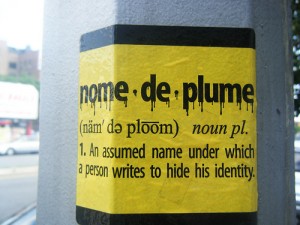
Of Pen Names and Pseudonyms

28 Sep

In the age of new media, how do we value anonymity? Does using a pen name devalue journalism? The recent publication of a review written by a critic using a pen name ignited a debate between critics and performers on the need for pseudonyms in criticism. Some said that anonymous reviews “…completely negate the credibility of your magazine”, whilst others dismissed the practice as “cowardly”.

So, are anonymous reviews ever okay? Yes. I believe that using a false name does not mean a writer is peddling false information or an untruthful review, and using an assumed name doesn’t mean that a writer doesn’t stand by their work. In fact, I have two writers that use pen names as a way to separate their reviewing lives from their everyday lives and future careers. I understand why they do this, and I’ve always been very open with venues and editors about their assumed names.

A professional writer’s reasons for choosing anonymity over a recognisable byline aren’t due to nefarious reasons or ulterior motives. Pen names have long been part of the journalism industry; in the 18th and 19th century, it was very common for journalists to produce pieces under a different name. In fact, George Bernard Shaw began his career working as a music critic for The Star, using the pseudonym, Corno di Bassetto. Similarly, as a young student, Arthur Miller wrote criticism under the name Matt Wayne and Anthony Burgess was a pseudonym based on the writer’s birth name, John Anthony Burgess Wilson.

Obviously the growth of the internet has made anonymous critics, whether they are existing critics or the public, commonplace However, those that choose not to reveal their names when writing reviews aren’t trolling. Their lack of identity doesn’t mean that they lack morals or basic journalism training; their reasons for staying anonymous are many and are often very personal.

For example, a writer might choose to write under another name because an established journalist already uses their name. I’ve never used a pen name, however, in the future, I might have to use one, because there is already a journalist called Amy Taylor, and using another name, or simply using my initials might end any confusion between the two of us.

Another reason would be that the writer has a name that is hard to pronounce or spell, so simplifying it would make them easier to search for online, and also make their name much easier for editors and readers alike to remember. Or a writer may want to give themselves a new name in order to improve or make their birth name more suitable to their vocation. After all, would you rather read an essay by an author called Thomas Lanier Williams III or Tennessee Williams?

Some writers choose a pen name to end the limitations of their name, or begin to write pieces in a different style, or about a different subject. In 1977, Steven King, fearing he would oversaturate the horror novel market by publishing too many books in one year, began writing  under the pseudonym Richard Bachman. His alter ego was ‘killed off’ very suddenly in 1985, when an intrepid book store clerk uncovered Bachman’s real identity.

Similarly, Iain Banks, who wrote the horror novels The Wasp Factory and The Crow Road, uses the name Iain M. Banks for his science fiction novels, in order to define his separate writing identities.

Anonymity might be part of their work, such as if the writer regularly writes about real life stories. For example, Gizmodo UK’s police blogger uses the pseudonym Matt Delito when writing about his job in the police force. While he never names his colleagues or the people he arrests in his work, his position has to be anonymous in order to protect him and the cases he works on. If he were to be ‘unmasked’ his job, his livelihood, his cases and perhaps even his life could be put in danger. Gizmodo informs the reader that Delito is a pseudonym via a disclaimer, as do most publications that carry this type of content.

In the world of criticism, content is king. But are we putting too much emphasis on bylines? Are we putting author credit above the quality of our own content? Producing a review that is rich, readable and above all authoritative, is what every critic strives for, and indeed, it’s what every reader wants to see. Consistency, like writing high-quality and engaging content is also vital. If a writer uses just one pseudonym regularly throughout their career, their pen name will be established, and that name will become a familiar feature in the industry that they write about.

Some writers choose to be transparent about their pen names, such as the novelist Nora Roberts, has also written novels under the name J.D. Robb. Her tactic of being open about her pen name makes her seem more versatile to her readers. But for some critics and other writers, transparency is not something that they can commit to, for various reasons. Anonymity can be and is a very valuable tool for some critics, for some it is a way of getting noticed, and for others, it’s simply a way of keeping a part of their lives personal.

So do anonymous reviews ruin a magazine’s reputation? It depends on the content, and the writer’s reasons for being anonymous. But in terms of theatre criticism, it would take a very, very poorly written review written by a critic under a pseudonym to do that. As for them being cowardly, with journalism becoming tougher to get into, more and more writers may take on part-time, or perhaps even full-time work in order to make ends meet. Are they cowardly, or a fact of life as a writer? Are writers truly aware of how prevalent pen names are in the creative industries? Perhaps we should all start being more transparent about the use of pen names in journalism, in order to end the stigma that seems to surround them in the 21st century? We are, as a species, naturally suspicious of secrecy, but we need to embrace the pseudonym once again, especially in journalism, because pen names aren’t just part of the industry, they’re one of the many reasons that journalism has thrived.

Theatre Criticism Will Eat Itself

27 Sep

The last few weeks have been really very interesting. I published a blog post called ‘Trash and the Libel Case, or How to Piss Off a Theatre Critic’ on Sunday evening. The blog described my treatment at the hands of a difficult company that performed at the Fringe last month, and for many reasons, I decided not to name the company involved. By Monday evening, thanks to retweets and word of mouth, the blog had been read thousands of times, and many people, from performers, to fellow critics to PRs and journalists had contacted me to tell me their thoughts on the blog, and share similar experiences.

I was and I still am surprised and overwhelmed by the positive response that the blog got from performers, critics, PRs and so many others. Some people said I was brave for writing and publishing it and others told me of similar experiences that they’d found themselves in, either as a journalist or as a performer. To everyone that took the time to share their stories with me, and support me during that time, whether it was by email, on Twitter or even just by commenting on my blog, thank you. You’ve made me feel so much better and given me the support I needed. I will try to respond to everyone, but it’s going to take some time!

However, obviously, there were criticisms of the blog; the most common of which was my decision to not name the company or the individuals involved. Other criticisms aimed at the blog post were things like: the length of my blog, my actions towards the theatre company at the time and general spelling and grammatical errors (to the gentleman who offered to point these errors out to me, thank you).

But there was one comment that I really wanted to address.  This question was raised by the actor, Guy Masterson, who told me that I went too far in my original review by mentioning that the show didn’t have the rights to perform the sketches from the TV show that it was emulating. He asked me if I believed that it was in my “remit as a reviewer to research and to point out that the show was unauthorised?” Before adding that he believed that “… a critic has a far greater responsibility than merely offering “opinion”. Their review should be a balanced, considered, comparative work of criticism, not merely an opinion. This requires the acquisition of experience and knowledge and careful wording to assure that any opinion is couched correctly and fairly and constructively.”

To answer Guy’s first point: Yes, I believe any reviewer worth reading should research the show that they are reviewing. This gives the reviewer, and therefore, the reader, an insight into the background of the company, of the play, the playwright and the director. Research helps a critic better understand a certain artist’s body of work, whilst giving their own review more authority and power. Research gives a reader the chance to find out related and useful information about the show the reviewer was writing about. For Sunshine Inc’s show, I felt I had a duty to inform anyone who read my review about the show’s main issue, which was the lack of authorisation.

As for his question about reviews being more than opinion, I feel that a reviewer gives their opinion on every aspect of a show that they are critiquing. So, when you read a review, you are, in effect, reading one person’s opinion. However, most reviewers’ opinions are based on years of experience of theatre, art, music, film and any other cultural art form. So as well as reading another person’s opinion, you are reading writing influenced by years of passion, craft and knowledge. Of course, all reviewers and publications are different, and therefore, standards of writing, fairness and constructiveness will differ. This doesn’t mean that one critic’s opinion and review is less valid than another’s – far from it, in fact – every reviewer writes differently, which is part of the magic of the critical game.

But the critical game is changing; reviewing is more accessible now than it has ever been, which is means that criticism has become more open to those that might not have been able to take part in it before. More reviewers means more reviews, and more reviews means more star ratings and more star ratings means more, tired disagreements about the use of star ratings. Some publications, such as The Stage and Total Theatre don’t use them, whereas others, such as The Guardian, The Skinny and The Public Reviews do. However, despite the fact that many publications do use stars in their reviews, there are those who disagree with the star rating system, and want to abolish the system, such as Masterson, who has created a Facebook group ‘Forum for Abolishment of Review Stars at Fringe’.

I must admit to not having a strong opinion on star ratings; I can see why some people have issues with them, and why some people continue to use them. Star ratings are a way of summing up a show’s quality quickly and concisely, they are an indicator of quality, of standard, and perhaps, most importantly, of value for the reader. However, I do not agree with removing star ratings at just one arts festival, speaking as a reviewer, and indeed an audience member, the stars are a welcome guide to the best and the worst of the Fringe.

However, modern criticism is not just about stars, it’s about the ideas we share, the performances we review and most importantly, the way we write. The critical voice has, and should be respected, regardless of where that reviewer has come from, or who they are writing for, or whether their publication is online, print or staffed by volunteers. The sad fact is that lots of reviewers are taking pay cuts, being made redundant, or even forced to work for free.

The critical circle should be welcoming, approachable and united; times are tough, so let’s not make them any more difficult. Change can and must happen, the evolution of theatre criticism, and indeed, criticism in general, is essential to our survival, and will stop criticism becoming merely a pastime of the privileged and the well-connected.

Arts journalism is changing, like the rest of the journalism industry is growing and developing into something completely different. Theatre Criticism is not just part of this change, it could lead it, as Exeunt’s experiment with Pinterest Theatre Reviews have revealed – we are innovative, and we are hard working. We just have to work together with tools at our disposal, such as social media, online publications and better accessibility, but we need to find a way to use them together.

Trash and The Libel Case Or, How to Piss Off a Theatre Critic

9 Sep

I updated this blog for the first time in nearly three months last week, but I couldn’t update again without discussing the tale of my recent experience of dealing with a very difficult company at the Edinburgh Festival Fringe. This encounter was very unpleasant, stressful and infuriating. Despite my anger, I’ve decided not to name the company involved, but for the purposes of this blog I will refer to them as Sunshine Inc.

This was my fourth year of reviewing during the Fringe and my first experience of being a Fringe editor, as I took up the post of Scotland Editor at The Public Reviews in May. In the midst of sorting through the thousands of Edinburgh Fringe PRs I received, my editor, John, forwarded me a PR for a Fringe show, suggesting that we book tickets and make a fun evening of it. The show was being performed by Sunshine Inc, and was presented as a two-hour long interactive comedy show, that involved actors impersonating characters from a famous TV comedy.

I booked the tickets for the show through their internal PR contact, a woman I’ll call Melina, who, I have to stress was very polite, helpful and friendly at the beginning. I did have to move the tickets by one day because of a scheduling clash, but again, Melina was very accommodating, and both myself and John were very much looking forward to the evening.

The show, however, was not like we expected, and we quickly realised that while the characters in the piece were designed to look and sound like the TV characters – they dressed similarly, and they even used their famous one-liners – this was where the similarities to the TV show ended. The evening consisted of these actors using new and ‘original’ content instead of established sketches from the TV programme, which wasn’t what I was expecting. Suffice to say, I didn’t enjoy Sunshine Inc’s offering, and I wrote what was I felt was a negative, yet honest and fair review, which was published on The Public Reviews website shortly after. In my review, I stated that the show was “unauthorised” as when I researched the show, I found a number of articles and quotes from the makers of the TV show saying that the show had not been authorised by them. Quotes from Sunshine Inc’s Managing Director, Francis, revealed that he hadn’t contacted the makers of TV programme to ask for permission to use the characters. Furthermore, on Sunshine Inc’s website they stated in the small print that their work had no association with the makers of the original TV show. So, with this information to hand, I mentioned in the review that the show was unauthorised.

A few days after the review was published, Melina emailed me to ask if we had any feedback on the show, and I replied with a link to the review, along with a brief response explaining that I hadn’t enjoyed the evening, but thanking her for inviting me and John along.

Melina’s response was interesting, to say the least; she emailed me back almost immediately and asked for the details of our “Managing Director” stating that there were points in my review that were of “great concern”. I responded, explaining that John, my editor, was the best person to contact and included his email address.

However, Melina emailed me again to ask for John’s mobile number, but because John was reviewing throughout the day, I was unwilling to share his phone number without his consent, or without him knowing what was going on. I decided not to respond to her email immediately, and concentrated on getting in touch with John to explain the situation.

As I tried to get hold of John, however, Melina continued emailing me demanding John’s phone number, saying that Sunshine Inc’s managing director, Francis, wanted to speak to him. Again I didn’t reply to her emails as I was concentrating on getting in touch with John. However, Milena’s emails continued, and she then began demanding that I remove the review from the website “immediately”. She also claimed that the show was authorised, yet didn’t say by who, and didn’t produce any evidence of this authorisation. When that failed to elicit a response from me, she further claimed that my review was “lies” and was therefore “libel” and again demanded I take the review down “immediately”, or they “would take legal action'”.

After reading these emails, John asked Milena to send him an email detailing her concerns, and to also highlight what parts of the review that she and Francis believed to be libellous. He further asked her to include the evidence of their authorisation so that we could address their concerns. Milena, however, ignored this, and emailed me again, telling me to take down the review before they took legal action. I replied, repeating what John had said, and also stressing that we couldn’t help them until they told us what issues they had with my review. I also asked her to send me evidence of authorisation, and asked for specifics, including the details of who exactly had authorised the show, such as the TV channel, the production company or the show’s writers.

Milena responded, ignoring my request, offering no evidence of authorisation, and further accusing me of trying to discredit the company, alleging that I had something against Sunshine Inc. This is untrue; I had never heard of Sunshine Inc until John forwarded me their Fringe PR in May. After reading this email, and following legal advice, I was told not to respond to any further emails from either Milena, Francis or any other representative of Sunshine Inc, as they had stated they were taking legal action, and could use our emails against us in the future. The lawyer also assured us that if they really were taking legal action, we’d be hearing from their lawyer, and not them, as they would also be told not to contact us for the same reasons.

However, despite my silence, Milena continued to email me throughout the day, and her emails became steadily more aggressive and more bizarre. John even forwarded me an email that Milena had sent to him, alleging that I was involved with a rival theatre company, naming the founder of that company, a woman I shall call Julie, and stating that this company had a “history of malicious intent” against Sunshine Inc. Incidentally, when Milena emailed John with this allegation, she inadvertently libelled me and Julie by alleging we were working together. These emails culminated in Milena taking a screenshot of my Twitter account, stating that the nature of my tweets regarding their show, which had been written after the review had been published, showed my negative review had been “premeditated” and that they were “taking further action”. They further accused me of “gross unprofessionalism”.

I contacted the Fringe Media Office to ask for advice about the situation. To my surprise, they told me that they were aware of what was happening, as Sunshine Inc had contacted them earlier that day. They told me that in a phone call that lasted around an hour, both Milena and Francis had spoken to Fringe media officers, demanding that the Fringe use their “considerable power” to force John and me to remove the review from The Public Reviews. The Fringe Media Office refused, as they don’t possess that power, nor do they want to.

A few days later, someone from Sunshine Inc called my mobile, but I let the call go straight to answer phone. They didn’t leave a message, and luckily, they haven’t tried to phone me since. Their emails, however, continued until the end of the Fringe, as they emailed John on several occasions to ask for the details of our “Managing Director” and for an address, so they could send an “official letter of complaint.” Eventually, John emailed them back, explaining that we had no managing director, we had no official address as we are online media, and that the best way to get in touch was to email him with specific concerns. Which, irritatingly enough, was what we asked them to do weeks earlier, when they had first made legal threats. They responded, asking “Who owns and runs The Public Reviews?” To which John explained that he did, and we haven’t heard from them since.

This happened during the second week of the Fringe, and while I like to consider myself as an experienced and confident reviewer, this incident shook me to the core. It made me question myself, my writing, my abilities and my voice, and was an extra stress during an already incredibly stressful time. I trained in art journalism for two years at university, and I have worked hard for the last three years since graduating to establish myself as an honest, objective and constructive critic. While I have had my fair share of abuse because of my reviews, this is the first time that I have been threatened with legal action for what I have written. I researched the piece thoroughly, as I do with every review I write, and I wrote a truthful and accurate review.

What’s very interesting, however, is that Sunshine Inc had one other reviewer attend the show, who also gave them a negative review. I have spoken to the editor of that publication, and they have not been contacted by anyone from Sunshine Inc. Recently, I made contact with one of the writers of the TV show, who confirmed that Sunshine Inc had never received authorisation from him to use his characters in their show.

Reviews are, essentially, the reviewer’s opinion, and as with any thing else in life, opinions will differ on almost many subjects, especially when it comes to performance. People are entitled to disagree with critical opinion, just as they are entitled to disagree with popular opinion. However, threats of legal action, and the intimidation, bullying and harassment of journalists simply because someone disagrees with what they have written, are immoral, unethical and odious. I cannot and will not be treated this way, by a company that are so desperate to undermine my authority and my review that they are prepared to not only accuse me of libel, but also in turn, libel both me and Julie in email correspondence. I have no idea if Milena and Francis have threatened journalists before, but judging by how quickly they threatened me with legal action, I would hazard a guess that this probably isn’t the first time that they’ve done this.

My advice to any company that is disappointed with a review is to see what they can take from it. If the review is constructive, then there will be something positive in there that you can learn from. If the reviewer has made an error, such as a spelling error, or got the name of an actor wrong, then feel free to contact them and tell them. Journalists, like all human beings, are fallible, and often work to very tight deadlines, especially during Fringe time. Tight deadlines, full schedules and many, many sleepless nights can lead to mistakes in copy. Editors are often very happy to correct inaccuracies when contacted.

However, a difference in opinion is simply a difference in opinion. Libel law exists to protect people who have been libelled and who have had very unfair things said about them in print. It does not exist to prosecute journalists who give a show a negative review, and it most certainly was not created to be used as a threat designed to intimidate journalists, editors and bloggers. Libel is a very, very damaging word and process, it comes with responsibility and should only be used if there is an actual case for libel proceedings. Journalists are busy people. Journalists are especially busy during the Fringe; we don’t even have the time to respond to the most basic emails during August, let alone waste precious hours and even days, dealing with baseless and utterly false allegations against us. I am very angry that I had to devote what little time I had during the Fringe to Sunshine Inc, because it cut into my reviewing schedule, which meant that I couldn’t attend the shows that I really, really wanted to review.

So to all journalists and bloggers: familiarise yourself with UK media law; study it until you can recite it. Join the NUJ – they have lots of lawyers who can deal with threats like this on your behalf. Stand your ground, don’t give into intimidation, bullying and aggressive, underhand tactics by “companies” like Sunshine Inc.

To all the people who supported me during this difficult time, including John and Glen at The Public Reviews, my close friends and family, the Fringe Media Office, Liam Rudden of The Edinburgh Evening News, Nick Awde of The Stage, and the CATS panel, including Michael Cox, Joyce McMillan, Mary Brennan, Allan Radcliffe, Mark Brown, Neil Cooper, Mark Fisher, Thom Dibdin and Gareth K. Vile: thank you. Your words and advice were of great comfort, and I’m so glad that you took the time to listen to me and support me last month.

And finally, to Sunshine Inc, I will say this: journalists communicate with one another. This means that if you threaten a writer or a publication with legal proceedings, other writers will hear about it. Once others learn about your treatment of journalists, it damages your reputation more than any negative review ever could. Some might say that’s ironic, but to me, that’s poetic justice.

Update: Following a request from Interactive Theatre International (formerly Interactive Theatre Australia) I am happy to confirm that the show and company in this blog have no connection with Interactive Theatre International or their show, Faulty Towers The Dining Experience which was performed at B’est Restaurant at this year’s Fringe.

Cameron’s Cabinet Reshuffle – It’s Not For Girls

5 Sep

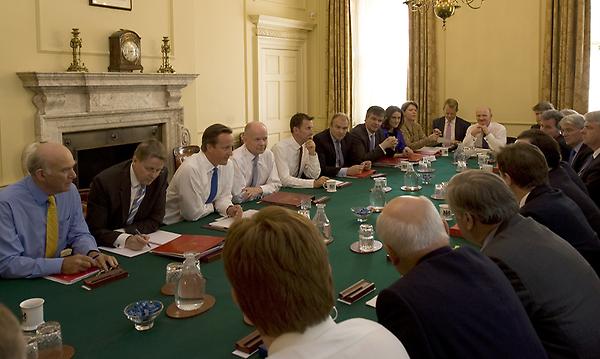
Can you spot the female MPs?

It began after midnight, with Baroness Warsi’s now-infamous 2am tweet, where she broke the news that she was no longer the Conservative party’s co-chairman. Warsi, who was the first female Muslim MP, was quickly joined by Cheryl Gillan, who announced she had been removed from her post as Welsh Secretary. And so began the cabinet reshuffle that by the end of the day would see Cameron’s government lose 60% of its female MPs, including Warsi, who was their only ethnic minority MP, making this cabinet the most white, male and least culturally diverse one possible, highlighting the Conservative’s failure to modernise their own party.

In the cold, clear light of morning, more departures were announced, albeit, not always by Twitter, as the departures also included Kenneth Clarke, the Justice Secretary, or the one that made those ignorant comments about ‘serious rape’ last year, although he is to remain in the government.

However, perhaps the most surprising change was David Cameron’s decision to appoint Jeremy Hunt as the new Health Secretary, who replaces the much-maligned Andrew Lansley. While Lansley is set to become the Leader of the Commons, Hunt, the MP whose ties to the Murdoch media empire, and a man incapable of ringing a bell without injuring someone, is now in charge of the nation’s health.

Let me be frank, there are a number of reasons why the former Secretary of State for Culture, the Olympics, Sport and media should not be the new Health Secretary: his connections to Rupert Murdoch during News Corp’s failed BSkyB takeover bid have been well-documented, as his desire to disband the NHS, our national health service, which provides free healthcare for every citizen. In 2009, he was one of three MPs named by the Mirror (the others were Greg Clark and Michael Gove) as in favour of dismantling the NHS. They claimed it was “no longer relevant” in the book, Direct Democracy. Hunt is also a well-known fan of homoeopathy, and is one of a few MPs who voted to decrease the abortion limit from 24 weeks to 12 weeks or under.

Hunt’s extreme views on abortion control limit womens’ options during an unplanned pregnancy. Considering that many women don’t realise that they are pregnant until around 6 weeks, and with waiting times for abortions being more than two weeks at some clinics, that leaves very little time to make a difficult decision. Hunt is also against stem cell research.

Another notable promotion was that of Hunt’s replacement, Maria Miller, a former disability minister who will take over the departure of Culture, and will also take on the responsibility of Women and Equalities from Theresa May, as these departments are to become part of the culture department. While some sources claim that Miller is more connected to culture than Hunt and his predecessors, her track record in both women’s issues and equalities is damning.

Miller has amongst other things, voted to raise university fees and voted against gay marriage. She is opposed to gay couples adopting and lesbian couples receiving fertility treatment. She is against abortion, and like Hunt, voted to change the abortion limit, but from 24 to 20 weeks. She backed Nadine Dorries’ failed attempt to allow independent and faith-based groups to counsel women seeking abortions, rather than abortion providers, such as BPAS, who provide balanced and unbiased information for women facing the challenges of an unwanted pregnancy.

In place of what we had before, we now have an anti-choice, anti-NHS, minister in charge of our health and an anti-choice, anti-equal rights minister in charge of women rights, women’s health and equal rights of gay couples. Whichever way you look at it, things are only going to get worse.

Money and Change: A Young Journalist’s Lament

3 Sep

Image

When I started training to be a theatre critic in 2007, theatre criticism, the internet and digital media were very different. Print was still the primary place for all things theatre criticism related, and indeed, journalism, while online was seen as a younger, but less important sidekick to the newspaper industry.

When I graduated in 2009, theatre criticism, and indeed journalism as an industry, was already changing; content was increasingly being published online, and independent websites were starting to rival the output of more established printed magazines. But perhaps, most importantly, in 2009, the credit crunch of 2007/2008 had become a full-blown recession, leading to redundancies, the closure of newspapers and publishers and fewer opportunities for both young and established journalists. For a new journalist, like me, who needed experience, working for free was a very real and very real way to get into the industry.

In 2012, journalism is still evolving; while some newspapers, such as The Times, The Sunday Times in the UK and The New York Times in the US have put their online content behind a paywall. However, they are fighting against increasingly popular and considerably newer websites, who continue to put their content out for free. While a paywall may be the way forward, and a way for revenue-starved newspapers to increase their circulation and make some money from their websites, many readers, writers, journalists and editors disagree on the use of them.

But the conundrum remains – how can journalists start making money from online content? How much to charge? How often to charge for access to online content? And perhaps most importantly, how do readers feel about paying for accessing news websites?

I always knew that journalism wasn’t well paid, and so, the desire to write and inform outweighed any ideas I might have once have had about making more than £25,000 a year. Although I’ve continued to work for free since graduating, primarily because paid opportunities are very slim if you have no contacts in the industry, I’ve still managed to make a total of £190 from my writing since then. However, this figure is from three separate commissions over three years and in the meantime, in the hope of being noticed, I’ve continued to write for free. I’ve also paid for all travel, food and other expenses during time, so, in that sense, some remuneration would be fair, if not deserved. But until some changes are made across the board and every newspaper decides how they can make money from online, more and more writers will have to continue to work for nothing.

Photo by Images_of_money under Creative Commons Licence

Killer Joe

27 Jun

William Friedkin/2012/USA/ 103 min

Showing @Festival Theatre, Wed 20 June, 21:30

4 Stars

William Friedkin’s long-awaited Killer Joe, adapted by the Pulitzer-Prize winning playwright, Tracy Letts from his play of the same name, is this year’s Festival’s Opening Gala film. And while this darkly comic thriller has been the most anticipated film at the festival, they hype is to be believed, as Friedkin, Letts and Matthew McConaughey have committed one of the most inspired and memorable pieces of film committed to celluloid.

When Chris (Emile Hersch) needs $6,000 to pay off a debt, he and his family (Gina Gershon and Thomas Haden Church) decides to hire ‘Killer Joe’ (McConaughey) to kill his estranged mother in order to get at her $50,000 life insurance policy, which will be paid out to his younger and very innocent teenage sister, Dottie (Juno Temple). But the lack of a cash deposit for Joe’s services means that he has to take a retainer, in this case, Dottie, before he carries out the murder, which takes Chris and his family into a deadly game of betrayal, violence and degradation. A strong mix of black comedy, thrills and explosions of violence, Killer Joe is a defiant and unapologetic film that explores and questions just what we would do for money by presenting this question in an extreme situation. While the film does leave certain questions unanswered and maintains a certain air of ambiguity throughout, the strength of Friedkin’s piece lies in its ability to not only get under the skin, but also to sink its teeth into your skull. Completely mesmerising and ultimately unforgettable, Killer Joe is an utterly unique and powerful film, that shows how vulnerable we all truly are, and how easily situations can spiral out of control. McConaughey’s turn as the cold, calculating, yet complicated hired killer, is both terrifying and inspiring; his performance is flawless, natural, and completely believable. Perhaps one of the darkest, yet most impressive films on the festival programme this year, Friedkin and Letts have created a simple yet catastrophically effective new piece of cinema that could become a masterpiece.

This review was originally published on Caledonian Mercury

The Life and Times of Paul the Psychic Octopus

27 Jun

Alexandre O Phillippe/USA/2012/English, German, Spanish, Italian and Russian Dialogue with English subtitles/72 min

Showing @ Filmhouse Fri 22 June @20:45, @Cineworld Sat 23 June @ 15:05

4 Stars

Returning to the Edinburgh International Film Festival, following the success of his standout documentary, The People Vs George Lucas, director Alexandre O Phillippe, turns his unique style of filmmaking towards the world’s most unlucky football pundit, an octopus named Paul, in this witty, funny and thought-provoking film, The Life and Times of Paul the Psychic Octopus.

Beginning with the oddly moving scenes of Paul’s cremation, Phillippe’s film uses interviews with those closest to the mysterious cephalopod to create a portrait that says more about humanity and world culture, than it does about Paul’s infallible legacy. Filmed in locations across the globe, including the UK, Ireland, Italy, Spain, Russia and Paul’s former home at the Sea Life centre in Oberhausen, Germany, and featuring songs, films, animations inspired by Paul, the film delves into a number of issues ranging from the mathematical, the psychological, the philosophical, the mythological and the absurd. Like The People Vs George Lucas, Phillippe’s latest documentary, while impeccably researched and filmed, is very aware of its limitations; after all, just how much can you say about a supposedly psychic octopus? But what Philippe is concerned with is creating a film that presents all the sides of the story of Paul’s unique rise to fame, resulting in a piece that is well-rounded, philosophical, and at points, side achingly funny. From Paul having his own agent, to the ongoing debate about Paul’s official nationality, to a discussion about whether some animals are psychic, this film is as fulfilling as it is entertaining. While Paul’s position as a modern-day animal oracle is argued well, logic and numbers are also at play, as Paul’s chances of correctly guessing eight out of eight games at the 2010 World Cup are revealed to be 256 to one. A highlight of the festival this year, The Life and Times of Paul the Psychic Octopus is a surprisingly educational but ultimately cheeky new documentary.

This review was originally published on Caledonian Mercury.

Sun Don’t Shine

27 Jun

Amy Seimetz/USA/2012/79 min

Showing @ Cineworld Thu 21 June @ 18:30, @ Cineworld Sat 23 June @ 13:05

Rating: 2 Stars

The great American road movie has come in many forms over the years, and while Roger Corman’s The Trip is probably one of the best-known examples of the genre, Sun Don’t Shine, written and directed by Amy Seimetz, attempts to bring a new dimension to the road trip movie, but fails because of its clichéd and dull characterisation.

Following young and dysfunctional lovers, Crystal (Kate Lyn Sheil) and Leo (Kentucker Audley) as they drive across the US to Florida, in the stifling heat, whilst trying to hide a terrible secret, the film’s premise is promising, but the characters’ odd relationship soon makes Sun Don’t Shine difficult to watch. While Seimetz does attempt to challenge the audience with flashbacks, allusions to mental illness, abuse and an overall sense of foreboding, her characters simply don’t sit well within the piece. Crystal, is emotional, stressed and childlike, while Leo is insular, violent and unpredictable, and together they are a volatile and toxic combination. And herein lies the problem with Sun Don’t Shine; the audience simply can’t sympathise with the two main characters. This could be Seimetz’s intention, given the name of the film, but all road movies, especially those about couples on the run from the law, the audience need to be able to sympathise with them, to make them the heroes, to want them to escape from the authorities. But it’s impossible for the audience to like Crystal and Leo, because of their irrational behaviour, due to their past circumstances, and their conjoined history is irritatingly ambiguous, and the few clues to their past actions introduced a little too late. While the acting is strong, and the film harks back to a very different age of cinema, this tale of love, crime, fear and betrayal it’s nowhere near as groundbreaking as the films in the same genre that came before it.

Fukushima: Memories of the Lost Landscape (Soma kanka: dai ichi bu – ubawareta tochi no kioku)

27 Jun

Yojyu Matsubayashi/Japan/2011/Japanese dialogue with English subtitles /109 min

Showing @ Filmhouse Thu 21 June @ 20:05, @ Cineworld Sat 23 June @ 18:50

Rating: 3 Stars

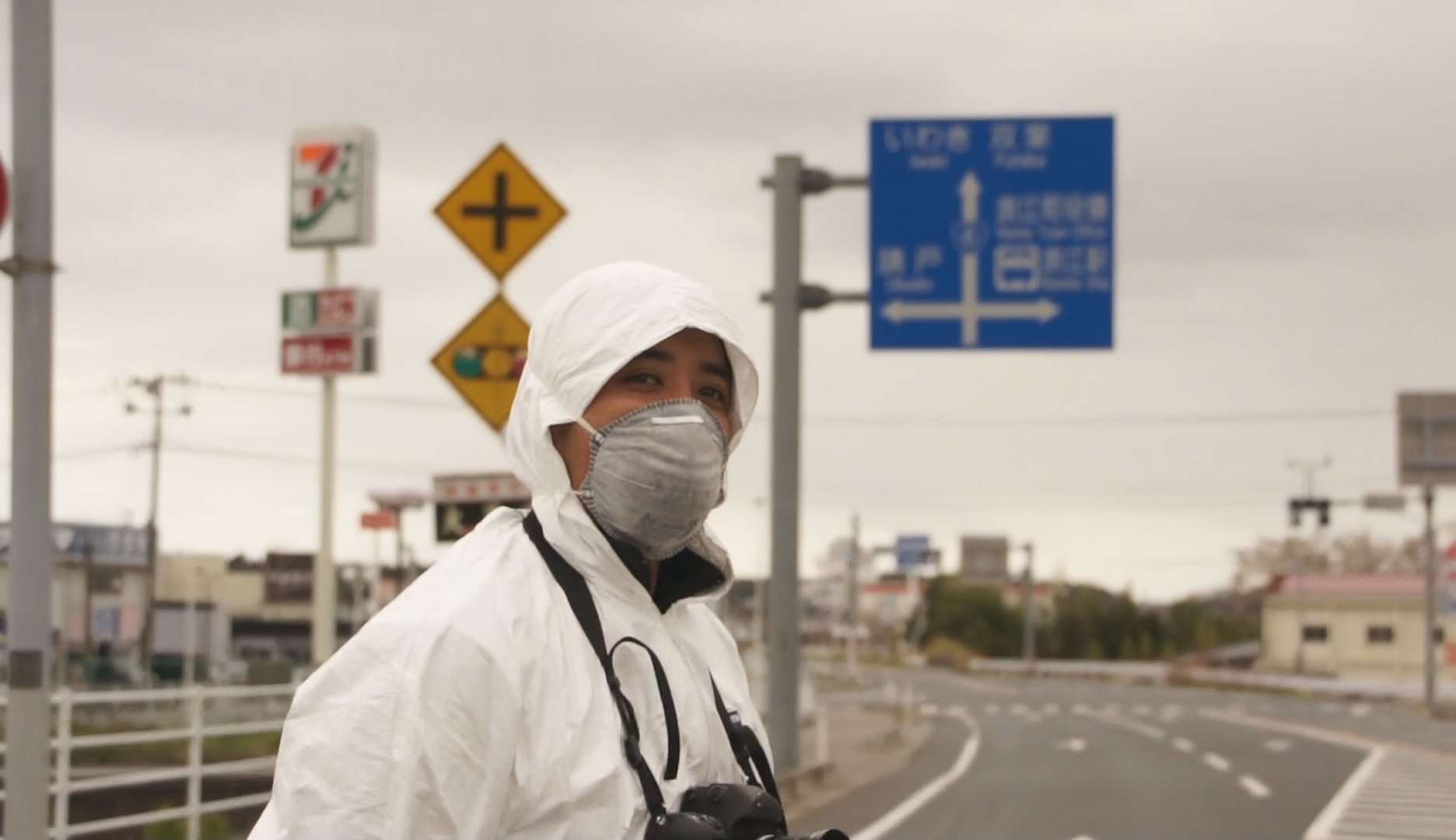
The aftermath of the Japanese tsunami in April last year is the basis of Fukushima: Memories of the Lost Landscape, a new documentary from Yojyu Matsubayashi , the director of the 2004 documentary For Those Who Work. Filmed just one month after the tsunami and the associated nuclear disaster at the Fukishima Daichi Nuclear Power Plant devastated north east Japan, freelance filmmaker, Matsubayashi travelled within 20 km of the plant in order to document the effects of these destructive events on the remaining residents, including the inspirational Tanaka family.

Moving, informative and entertaining, Fukushima is more concerned with capturing the very real human cost of these disasters than it is of sensationalising the events of last year. Through interviews with survivors, Matsubayashi paints a portrait of contemporary Japan through the eyes of the older generation; revealing a country on the verge of great social change. This snapshot of Japan in its most vulnerable and most transitional state is what gives this film its power, as alongside scenes of destruction, are moments of comedy, tragedy and selflessness from all the film’s subjects, including the Tanakas. Issues of tradition are also brought to the forefront of the film, as the desecration of old temples and other ancient structures is juxtaposed perfectly with the film’s documentation of the younger generation’s apathy towards the older generation. A thought that’s only cemented by the elderly subjects of the documentary having to cope on their own, without the help of their children, or even their grandchildren. While the film does reveal some painful truths, it’s in essence, a celebration of all the contrasting pieces that make up humanity, including our fallible nature, our need for comfort, and above all our instinctive desire to survive, Fukushima provides a fascinating glimpse into the changing nature and attitudes towards the elderly in a country scarred by terrible natural disasters, but manages to remind us that hope and patience can get us through anything.

Originally published on Caledonian Mercury

KNUT

DIY or DIE

Deeply Fascinating

Thoughts on contemporary performance

Lili La Scala

a collection of words and pictures

The Arabic Apprentice

A native English speaker's attempts to master Arabic

Stroppy Editor

Minding other people’s language. A lot.

Keren Nicol

Thoughts from an arts marketer living in in Scotland. Not always about arts marketing

EYELASHROAMING

A blog by Ashleigh Young

monica byrne

novelist . playwright . screenwriter

CaptainAwkward.com

Don't need to be cool to be kind.

Benjamin Studebaker

Yet Another Attempt to Make the World a Better Place by Writing Things

Thao Votang

fiction author

Annalisa Barbieri

Writer and broadcaster

The FlavNav

Navigating my way around the world to get my life back