Archive | June, 2014

Damn Your Spoilers

15 Jun
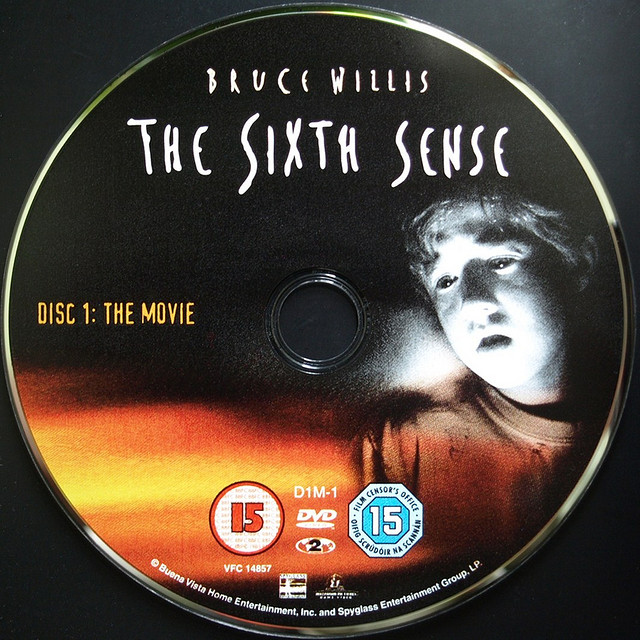
Image by Chris, shared under a Creative Commons Licence

Image by Chris, shared under a Creative Commons Licence

My spoiler story begins in 1999, not long after the dot-com boom, when the internet was seen as a luxury, not a necessity, and social media was in its infancy. Back then, Twitter and Facebook didn’t exist, the mainstream press were becoming aware of blogs and broadband was a distant dream. In my day, we had to rely on a dial-up internet connection for our kicks, baby.

In 1999, we feared the Millennium Bug, Y2K was something people genuinely said, and one of the films that dominated the UK box office that year, besides The Matrix, was M. Night Shyamalan’s The Sixth Sense. Being a teenager with an obscene amount of free time at the weekend (oh, those were the days) I was meant to see the film with some friends, but for some reason that has vanished in the sinking sands of time, I couldn’t go.

At school that Monday, my dear friend Paul, who had gone to the cinema that weekend, bounded over to me at registration. I forget what he said exactly, but our conversation went something like this:

Paul: “The Sixth Sense was amazing!”

Me: “I’m sorry I couldn’t make it.”

Paul: “It was one of the best films I’ve ever seen!”

Me: “Cool, I’ll try to see it this weekend.”

Paul: “It was amazing, the ending, Amy, the ending! Oh my God, I have to tell you…”

And that was how my dear friend Paul hurled the ending of The Sixth Sense into our conversation like a fraternity pledge on an Ipecac bender, and burned it into my memory. The ending was, at the time, a surprise and is, by now, one most people will be very familiar with, but I’m saying nothing, just in case.

I told him that I now wouldn’t be able to see the film, because he’d just given away the ending, to which he answered with all the innocence and confusion of a hungry toddler caught with their hand buried deep inside the cookie jar:

“Yes, you can! It’s still at the cinema.”

Spoilers don’t just come up in conversations with overly enthusiastic friends these days. They lurk in careless tweets, they are revealed in late night Facebook statuses, and they wait in poorly written reviews by inexperienced writers.

Unlike 1999, it’s now never been easier to have an online platform where you tell the world your opinions, and it’s the immediacy of the internet that has spawned a culture that thrives on not just new information, but the speed at which we can receive that information. It’s the ultimate competition, where those who hesitate instead of posting will not get those extra visits to their website, and they won’t have their thoughts retweeted hundreds, if not thousands, of times.

We have created an online culture that is saturated with opinions on just about everything, and the more controversial the article, the more notoriety and more attention it creates for the writer. But this yearning for affirmation on the part of the writer lacks something vital and human: empathy.

When my dear friend Paul told me the ending to the film, he did it because he was so amazed by what he’d seen. He wanted to share his experience of being in the cinema with me, because in his mind, I had missed out. However, by spoiling the film for me, he robbed me of the experience entirely, because it meant that I would never be able to view the film as he did when he watched it with no expectations. To him, and others who spoil things, he wasn’t in the wrong for giving the ending away; I hadn’t seen the film, therefore, it was my problem.

Spoiling a film is not the same as a real robbery in the street, nor can it ever equate to the violation of having your home burgled, but when someone spoils a film, it’s theft. It’s not a violent act at all, but they have taken an experience from you ensuring that it can never be yours.

I saw The Sixth Sense many years later, and although it’s no Citizen Kane, The Usual Suspects or Alien (films which, thankfully, all remained spoiler free until I saw them) I couldn’t help but wonder if my reaction to it would have been different if I hadn’t been aware of the film’s definitive scenes.

While we now know that Shyamalan’s movies typically contain some sort of twist, and his subsequent films have received very mixed reviews, whenever I think of The Sixth Sense, I remember that morning, in school with my dear friend Paul, telling me the ending to it, first, before the memory of actually seeing the film.

I want my memories of watching a film or TV show to be about that film or TV show, not of the person that spoiled it for me. I remember when I went to see Star Wars for the first time when the Special Edition was released in 1997. I knew nothing about the film, I sat there, mute and still as the action played out before me, a long time ago in a galaxy far, far away.

I went back to that galaxy again to watch The Empire Strikes Back and again to watch Return of the Jedi with an identical sense of wonder and ignorance, and there I realised the true joy of discovery. There was no friend desperate to tell me their opinion, and no spoilerific review waiting for me in the paper, I saw the films as they were meant to be seen; for the first time, by someone with no preconceptions.

I want to be that child in the cinema once more, with no preconceptions, no prejudices, no bias. The child that walked home on air, her head full of the memory of seeing a film that I loved, a film that hadn’t been ruined or tainted by a careless comment or selfish tweet. But, in our post-digital world, where we value the immediacy of our content, over the accuracy of our content, can we learn to be silent once more?

I’ve gone out of my way to ensure that my social networks stay spoiler free; muting specific hashtags, keywords and even the names of characters in shows or a new film that I want to watch. This works, but because I can only control my own behaviour online, and nobody else’s, the odd spoiler slips through.

So, how do we stop the spoilers spreading? The answer is simple: shut up. Seen a film and can’t believe the ending? Be quiet. Did your favourite character die in Game of Thrones? Grieve quietly. Writing a review? Then be mysterious and subtle when writing the synopsis. Don’t assume that everyone you know has seen what you’ve just seen, let them discover it for themselves.

Be silent, or be damned.

How To Get Reviewed at the Edinburgh Festival Fringe

5 Jun
2011 Edinburgh Festival Fringe image by zoetnet, shared under a Creative Common Licence

2011 Edinburgh Festival Fringe image by zoetnet, shared under a Creative Common Licence

Hold on to your hats, the Edinburgh Festival Fringe is nigh! After months of anticipation, the long-awaited official launch of the Fringe takes place today in Scotland’s rather dreich capital city.

For years, the Fringe has been known as the place where some of the world’s most popular comedians, theatre companies, playwrights and directors were officially ‘discovered’, and because of this, thousands of people flock to the city every year, hoping to be the next big thing. They want to get those coveted critical bums on seats and nab a five-star review.

The Fringe, as we all know, is the world’s biggest arts and culture festival, so, how do you approach a critic and (hopefully) convince them to review your show?

A Note on Reviews

Before I discuss the finer points of Contacting a Reviewer 101, I have to explain the role of the critic, because I’ve found that some practitioners and PRs seem to be unsure about what it is that critics are supposed to do.

As we all know, critics write reviews, this is a given, but a review is like an omen; it can either be good or bad. A critic will not write a positive review just because they’ve been invited to a show; they will write a review based on their experience and it will (or should) be published in a timely fashion.

The critic is under no obligation to write either a good or a bad review, they are under obligation to write a truthful review that is helpful to the audience. The critic is loyal only to the reader; not to the venue, director, actor or playwright.

Therefore, if you want coverage that is uniformly positive and says exactly what you want it to say, then it’s better to buy an ad. If you want a reviewer’s professional opinion on your show, that you can then use in your publicity material, email the editor. Otherwise, contact the advertising department and pay for an advert.

Prepare Now

One of the more frustrating experiences for a Fringe critic is being contacted about a show that they would have really liked to review – after the Fringe has begun. This is because by then, their reviewing schedule has been confirmed and it’s highly unlikely that the critic will be able to fit the show into their itinerary.

You are much more likely to get a reviewer into your show if you contact them before the festival. I’ve been getting Fringe PRs since late April, but an editor friend of mine got her first one in February. So, if you’ve not started contacting the journalists you want to target yet, then do it as soon as possible, while the nation’s critics are thinking about their reviewing schedule.

Have Something to Say

When I worked in online PR, I often had to write press releases that weren’t newsworthy. I know, I hated it too. This was because we had clients that wanted a certain number of press releases written and submitted every month and so, I had to find something, if anything, to say about the client and their products that would (hopefully) appeal to journalists.

I did this by trying to find a newsworthy angle on the story or client. Sometimes it was because there was a breaking news story that had something to do with their industry, sometimes it was because something impressive had happened within the company, but whatever I chose to write about, it had to be newsworthy.

Journalists are always looking for newsworthy releases, we’re forever searching for a different angle to write about on the pressing issues of today. Not only do we need this news, we need to be the first to report it, so we want an exclusive. We want to get some exceptional information before our rivals and we have to be able to shout about it.

Everyone has a story; what makes your show, your company, your production stand out? Why should a critic review, or even preview your show before the Fringe as opposed to a rival piece in the same venue? Find your angle, find your voice, find your audience.

Press Release Etiquette

When it comes to press releases, everyone’s different. But, most critics I know agree on one thing; please don’t attach your PR as a PDF.

PDFs are great –  if you don’t want to copy and paste information from them or edit them in any way. So, if I’m trying to copy and paste your listings information to put it in my calendar or spreadsheet, the nature of a PDF means that I can’t do that.

However, attachments in general can trigger the wrath of a million fiery suns in even the most patient of critics. Some don’t download properly, they can contain viruses and some just aren’t compatible with the software on a journalist’s computer. So, instead of attaching anything, or adding a link to an external site in order to view your PR, copy and paste it into the body of your email; this saves time and effort later on.

If you are sending press releases for more than one show, then send one email per show, so that the email can be found quickly if needed. Also, it’s really helpful to put the name of the show, the venue and the dates in the subject of the email. If you do this, your PR will be a beacon of hope in a very overwhelmed journalist’s inbox. And please, don’t be the asshole that sends 22 attachments in one email.

Remember to check, double-check and triple check your listings information, such as dates, times and venue, a small hiccup here can have big consequences. You might find this Arts PR post that I wrote after the 2012 Edinburgh Festival Fringe helpful.

Be Human

In our digital age, it’s become far too easy to forget that the critics are actually people. I know we can have this reputation of being utterly terrifying, humourless, otherworldly sods who are only happy when we’re feasting on the broken dreams of Fringe casualties, but underneath that, we are human.

One of the things about being Homo sapiens is that we respond to being spoken to like living, breathing entities. We don’t want a generic email that doesn’t start with a greeting, demands a review, or fires the same promotional message at us repeatedly. We want to be able to read about the people and the passion at the heart of the project.

You don’t have to write a critic a novel detailing why you’re inviting them to your show, but you can personalise your email. This takes time, but it makes your email stand out. And let me tell you, when all the emails you’ve received that day have been overly promotional, full of horrendous PR buzzwords and have been devoid of any human emotion, getting a brief email that simply begins with a greeting and your name makes you sit up and pay attention.

Twit to Woo?

Social media is marvellous, isn’t it? It allows you to find and contact almost anyone, which means it’s a great place to reach out to a critic or publication. However, while social networking sites like Twitter will help you find the right people to invite to your show, I could caution against using it as a pitching tool.

The reason for this is simple: anything you put on social media is in the public domain, which means that everybody can read it, unless you have a private account. However, when you’re contacting a journalist, especially if you have an exclusive about your show, the open nature of social media means that your news will no longer be an exclusive, because everyone will have read about it online first.

Too often, Twitter accounts fire out the same promotional tweet to journalists and not only does it ensure that your news gets lost in the ether, it also looks lazy, so if you can’t be bothered to reach out properly, why should the critic go to see your show?

Feel free to make first contact on social media; follow the journalist’s account, say a quick hello and ask the critic if you can send them a PR, but don’t take up too much of their time. Social media is often treated like a platform for broadcasting, but it’s really for being sociable and engaging. You can also chat to the critic, be friendly and focus on building a long-term professional relationship with them, not just a filthy and unremarkable #EdFringe quickie. The contacts you make this year will remember you next year.

During the Fringe it’s nice to have somewhere to escape, to vent, and that’s what I use my Twitter account (*cough* @trashtaylor *cough*) for. Remember that the critic will have had lots of messages from other people trying to get them to review them too, so take it easy, you are in their space, be nice, be polite and have fun. Also, don’t forget that you are representing your show on social media, so don’t say anything stupid.

 The Follow-Up

One part of the process that some people rely on too heavily is the follow-up. While it’s understandable that someone may be anxious that their PR hasn’t reached its recipients, please rest assured that it has been received and it has been read. You can always email again, but ask yourself, do you have anything else to add, such as a piece of news, or the addition of extra dates?

Sending the same PR again is unnecessary, because you’ll just be repeating yourself. Today, I got a second email about a Fringe production and then a tweet from the show’s producer within a very short length of time, both of which told me nothing new about the piece. Don’t be the annoying person who constantly emails and calls publications; it won’t make critics magically find space for your show in their already packed schedules.

Is there anything else you really want to know? Is this year your first Fringe? Why not comment below and tell me?

KNUT

DIY or DIE

Deeply Fascinating

Thoughts on contemporary performance

Lili La Scala

a collection of words and pictures

The Arabic Apprentice

A native English speaker's attempts to master Arabic

Stroppy Editor

Minding other people’s language. A lot.

Keren Nicol

Thoughts from an arts marketer living in in Scotland. Not always about arts marketing

EYELASHROAMING

A blog by Ashleigh Young

monica byrne

novelist . playwright . screenwriter

CaptainAwkward.com

Don't need to be cool to be kind.

Benjamin Studebaker

Yet Another Attempt to Make the World a Better Place by Writing Things

Thao Votang

fiction author

Annalisa Barbieri

Writer and broadcaster

The FlavNav

Navigating my way around the world to get my life back