Archive | Journalism RSS feed for this section

Lianne Spiderbaby Didn’t Plagiarise Me, But I’m Angry Anyway

20 Jul
Lianne Spiderbaby, Plagiarist

Lianne Spiderbaby, Plagiarist

There is a very, very special place in Hell for people who plagiarise other writers’ work and pass it off as their own.

Recently, Lianne Spiderbaby (real name Lianne MacDougall), a well-known figure in the horror industry, who wrote for many horror publications, including FEARnet, Fangoria, Video Watchdog and was one of the hosts of the Fright Bytes YouTube channel was revealed to be a prolific plagiariser by Mike White of Impossible Funky.

Following an anonymous tip, White compiled a detailed and damning report into MacDougall’s body of work, which revealed that most of her articles, including her popular Spiderbaby’s Terror Tapes column on FEARnet, were not her own work, and had been largely ripped off from a number of other writers. Following the publication of this blog post, and the media attention surrounding this story, (MacDougall is, according to reports, dating Quentin Tarantino, himself no stranger to plagiarism controversies), more examples of MacDougall’s habit of passing off other people’s work as her own was discovered.

I’m not going to waste time and energy trying to work out what MacDougall’s motivation was for plagiarising other, and often unpaid writers, because, I don’t care about why she did it. I don’t particularly care about MacDougall, or her alter-ego, or who she may or may not be in a relationship with. I care about the writers she plagiarised, I care about the horror community, and I care about journalism.

When a someone is caught plagiarising, it’s not usually a first time offence. They could have been getting away with it for weeks, months, perhaps even longer. And when their plagiarism is uncovered, they are only sorry that they have been caught. Plagiarism destroys a writer’s reputation, it damages the reputation of the publication that writer worked for and it brings the journalism industry into disrepute. When someone decides to plagiarise someone else’s work, everyone loses.

In MacDougall’s case, each of the publications she has written for has been damaged in their own way, especially those that tried to defend her when the news of her plagiarism went viral. It’s embarrassed the horror community, a community where women aren’t as well represented as men. It will have affected the people who read her work, and her editors, but it’ll have hurt the unpaid or underpaid writers that she stole from, it’ll have hurt the bloggers that write because of their love of writing and film, and those that write in the hope of furthering their careers.

Plagiarists don’t deserve to be defended by publications, or have publications running scared about reporting the news of their lack of journalistic merit or talent, they deserve our condemnation. Plagiarists can’t plead ignorance; it’s well-known that plagiarism is deemed by many industries to be highly unethical. It’s not allowed in schools, colleges, or universities, in fact, it can get you expelled from all three of them. It is, essentially, the theft of another person’s intellectual property; it’s lazy, it’s selfish and it’s a very, very stupid thing to do.

I will never forget the day that I experienced plagiarism for the first time. I was a few months into my role of theatre editor at The Journal when I got a call from my editor, asking about a review written by one of my writers, a girl I will call Emma, for that was her name. Emma was studying a Journalism Masters, she was attentive, always asking for more reviewing work, and often asking for feedback on her pieces. I was pretty new at this editing lark, so I spent a lot of time giving her detailed notes and editing her reviews, which were often over the word count.

One publication weekend, a sub editor discovered similarities between Emma’s review of a dance piece, and a review of the same performance which had been published by another publication a few days earlier. The sub editor then checked her other reviews, and found that they had all been plagiarised in varying degrees from a number of sources, including one national publication and a local paper. In some cases, entire paragraphs had been copied and pasted into her copy. In others, some sentences bore striking similarities to other reviews of the same show. However, luckily, in more than one case, I’d unwittingly removed large parts of the plagiarised copy while editing her ‘work’.

Emma was confronted and denied everything, despite the evidence to the contrary. Emma was fired. However, Emma continued her course, graduated and the last thing I heard was that she was working for the BBC. But Karma catches up with everyone, eventually.

While MacDougall has so far said very little on the subject bar releasing one meagre tweet apologising for the “plagiarism in my work” (here’s a hint, if you plagiarise other people’s writing, it’s not your “work”, it’s theirs) it’s not enough. MacDougall has treated these writers, publications and the horror industry at large with utter contempt, displaying an unbelievable amount of cowardice along the way.

Her failure to answer for her actions, or attempt to redress the wrongs that she has committed is as infuriating as it is disappointing. It’s only right that she should face the consequences for her actions, although some are questioning whether this will happen at all, thanks to MacDougall’s position and her attempts at damage control, which included shutting down her blog and Twitter account, blaming her intern and pleading with editors to remove articles discussing her plagiarism.

Journalism is a very difficult industry to get into, especially given the current economic climate. The industry is constantly being questioned and analysed, it has suffered from recent scandals, from the rise of print journalism, from the loss of revenue. But the industry has suffered most from the loss of trust that has resulted from unethical practises, such as plagiarism, phone hacking and other sleazy methods that hurt people and damage journalism.

Lianne Spiderbaby has been damned by her own web of lies and deceit, and so, it’s up to the rest of us to salvage what we can and start building up trust with readers once more.

UPDATE:

After I wrote this post, I read BJ Colangelo’s posts on her fantastic Day Of The Woman blog, naming some of the best female horror journalists working in the industry right now.

These lists are super awesome, and it would be criminal not to celebrate the amazing work that these women are doing in the field.

And no, none of these amazing women are plagiarists!

Part One:

http://dayofwoman.blogspot.co.uk/2013/07/female-horror-journalists-you-should-be.html

Part Two:

http://dayofwoman.blogspot.co.uk/2013/07/female-horror-journalists-you-should-be_18.html


The 10 Commandments of the Successful Critic

15 Jun
Candle by clemetchene used under a Creative Commons License

Candle by clemetchene used under a Creative Commons License

1. I am the Editor, thy employer. Thou shalt turn up to the performance/show/film/gig that thou art reviewing on time, wherein thou shalt be able to arrive calm, content and able to review the piece in question.

2. Thou shalt research the work that thou art reviewing, be it the previous work of the performers/actors/director/writer, so that thou shalt know what thou is talking about, and won’t give the impression that thou art talking out of thy ass.

3. Thou shalt act as a respectable member of thy’s publication team when reviewing. This includes not overdoing it with the free alcohol and then embarrassing oneself because of said alcohol.

4. Thou shalt file copy on time and within the word limit.

5. Thou shalt not steal work from another writer, be they living or dead and pass it off as thine own. Plagiarism will be discovered, and thou will only set thyself back by ripping off the intellectual property of others.

6. Thou shalt be respectful to venue staff, including FOH staff, PR people and press officers.

7. Thou shalt write about more than the performance; thou shalt consider the cultural, political, social and historical context of a piece. Criticism must move beyond the tired “It looked nice, it was acted well” narrative.

8. Thou shalt write with brevity and clarity; why write a 20 word filler sentence when a simple 10 words will do?

9. Thou shalt proofread thy’s own work before sending it to thou’s editor.

10. Thou shalt be prepared to listen to constructive criticism of thine work, and thou shalt take this criticism to heart.

Some Advice For Aspiring Writers

30 May
Typewriter Image by Higginskurt, used under a Creative Commons Licence.

Typewriter Image by Higginskurt, used under a Creative Commons Licence.

I have, on occasion, been asked for advice by a young writer looking to grow their career. However, I also am, in one form or another, a young writer looking for my so-called “big break”. I have asked established journalists questions about how they got to where they are, I have poured over countless YouTube videos of interviews with my favourite writers, looking for that one sentence that would transform me from mere aspiring writer, to professional, in-demand and well-respected behemoth of a writer.

As it turns out, there is no definite answer; everyone has a different story. Some writers trained in journalism, some have an undergraduate degree, maybe even a postgraduate degree. Others fell into journalism by chance, after doing a degree in English or another language, some got onto coveted training schemes and bagged promising apprenticeships. The lucky ones had a friend who was influential in the industry, and managed to get themselves a good job that way.

If I wasn’t watching YouTube videos, I spoke to just about every journalist I met. Almost everyone I spoke to had come into the industry differently, some said having a postgraduate degree in anything was a waste of time, while others said that they wouldn’t have gotten anywhere if it weren’t for their qualifications. During an internship in London, at least two of the journalists I was working with advised me without any irony or malice, that I shouldn’t try to get into get into journalism, because there were no jobs, and things were only going to get worse.

In short, every answer I got, while interesting, confused me more. Should I go to back to university? I don’t have the money to do that. Should I do an NCTJ course? Should I try to diversify and start adding more skills to my CV? All the options available were so overwhelming that I felt like I was going struggling up a spiral staircase; I was moving, I was heading towards some kind of goal, but I wasn’t going anywhere fast. It was frustrating, it was tiring, it was not helpful at all.

And this is my advice; if you want to be a writer, write. Write as often as you can during the day, write in the evening, and then write again the next morning. Set yourself a goal to get up in the morning and write a specific amount of words before lunch, then smash that number.

Don’t forget to read, a writer needs to read and remember how to get lost in the literary worlds that other authors create for them. Reading is a joy, reading should never be a chore, if you don’t read anything, then how can you expect anyone to read your work?

And finally, here’s my golden rule: don’t ask other writers for advice. I’m serious. Every writer has a different story; every writer has a distinct background and voice. Their past is not your future, so create your own career path and carve your own journey in stone. Don’t strive to be a second-rate version of your favourite writer, be a first-rate version of yourself. Don’t imitate, create and never be afraid of doing the things that your idols didn’t do.

Surviving Life After Graduation

21 May
Trash on Taylor Street, SF

Trash on Taylor Street, SF


It’s here, graduation, it’s what you’ve been working towards for a number of years and it’s finally time for you to step outside and view the world, not as a poor student, but as a poor graduate. May I be one of the first to say, congratulations, and don’t worry, it gets so much better.

Right now, you might be thinking about hiring your graduation gown and getting your sweaty hands on the piece of paper that is your degree, but this will not automatically change your view of the world. Don’t get me wrong, your graduation will be great fun, it should give you some great memories, but it’s what happens after your graduation that really matters, and here’s some advice to get you through the weeks, months, even years after this.

Don’t Compare Your Life to Anyone Else’s

This is the rule that I simply cannot stress enough; your life is your life, so quit comparing it to everyone else’s. When I graduated in 2009, which was a very tough year to graduate – especially with a drama degree – I felt like so many of my classmates were walking into great jobs. One person more or less walked into their dream job and had numerous other opportunities thrown at them, yet I was still working at my not-quite-minimum-wage-job in the fast food industry.

In short, I was barely out of my graduation robes and I already felt like a failure; I was intimidated by other people’s progress and envious of their success. When one former classmate moved to London, I was stunned, I couldn’t imagine leaving Edinburgh, let alone Scotland. But the path you go down isn’t the same path that your friends will tiptoe along, and no path is set, you can always change your direction, and you can always, always go back.

It’s OK to Not Have a Plan

You might be one of those people who has a plan, a plan that will not be changed, a plan that they have no intention of changing in any way shape or form. This is fine, but this is not the way that a lot of people work. You don’t always need a plan, you don’t always need something that you set stone; you need that spark, that flash of inspiration, the revelation that comes to you when you’re doing the washing up, the epiphany that emerges as you’re about to fall asleep. Whatever it is, write it down, don’t forget it, and see how you can make this new dream a reality.

Have Something Else To Do

By this, I mean have a hobby. If you’re trying to become a professional writer; write, read, but also have something to do on the days where you just can’t face sitting in front of the computer for another long and unproductive afternoon.

Get out the house; see family, see friends, go to the cinema, the museum, go for a long walk to nowhere and sit and gaze at the sunset. Cook, clean, learn to play a musical instrument, volunteer, head to the gym and work with the Iron, run with no destination in mind, do something that helps you remove yourself from your work so that it remains your goal, your dream, not an instrument of torture. Creating something, working towards your future and being artistic shouldn’t mean that you have to over work yourself; know when to give yourself a break, and know when you are burning out.

You Are Not Your Degree

If I had a penny for every time that I mentioned that I have a drama degree, and every time someone has asked me if I was an actor because of my degree, I would have a fair few pennies. Yet, I would still not be a rich woman. I work with a team of very, very talented people in my day job. One has a PhD, some have degrees in art, others have degrees in history, some are in really good local bands, yet, we work in online marketing, which, we’ll admit, was not part of our plan, but it’s where we are for now. Your degree doesn’t control you, it doesn’t bind you to a certain industry or job, and remember that it can only hold you back if you let it hold you back. Your degree is a small part of your life; that doesn’t mean that it is your life, and it doesn’t mean that it will be part of your future.

Never, Ever Let Anyone Make You Doubt Yourself

One of the biggest mistakes I ever made in the years after graduating was listening to the wrong people. At that time, there were people in my life that liked to remind me of my limitations, and in doing so, held me back.

For example, during a conversation with a former friend last year, I mooted the idea of moving away from Edinburgh, possibly Scotland, maybe even the UK, to find work, to travel, or just to start anew. This former friend then reminded me that I own a flat, that I was very lucky to own property, and that there were so many other people out there that wanted to get their feet on the property ladder, which wasn’t fair. I can’t remember what it was that they said exactly, but their argument was that because I owned property and because other people didn’t/couldn’t, then I should never, ever think about travelling, ever. I was made to feel guilty and selfish for committing the terrible crime of Expressing a Desire to Travel Whilst Owning a House at the Same Time.

There are many reasons why this way of thinking is completely wrong, but when I thought about the conversation later, I realised that this person was talking about themselves, “I don’t think you should travel”, “I want to buy a house, how can you be so selfish when you have something that I want?” Don’t get into this way of thinking, anything is possible, even if you own property, have a small family, or a well-paid job. Don’t let anyone tell you not to follow your dreams, don’t let others have too much say in your life, this is your time, be your own person, create your own adventure.

21 Things I Wish University Had Taught Me

29 Apr

<a href=”http://www.bloglovin.com/blog/7192515/?claim=y2dz8a4md9c”>Follow my blog with Bloglovin</a>

Graduation Cake by CarbonNYC - image used under a Creative Commons Licence.

Graduation Cake by CarbonNYC – image used under a Creative Commons Licence.

I learned a lot during my time in higher education; some of which I realised fairly quickly, however, other lessons took a little longer to work out.

Here are just some of them.

1. The nervous first year student at matriculation and the new graduate receiving their degree four years later will not be the same person.

2. You will have doubts about your course/life/direction/goals.

3. If you get through university and are able to look after yourself through cooking, general hygiene and handling money responsibly, then you will know more than a great number of people in the UK, and indeed, the world.

4. Your Student Loan will take a while to pay off, but you WILL pay it off.

5. You will make post-university plans that you won’t stick to, and this is ok.

6. You will not walk into your perfect job after graduating, this will take time.

7. It’s never too late to change your mind.

8. Don’t listen to other people when they tell you that you can’t do something, such as travelling or moving away. This is your life, live it your way.

9. You will have to take a job for the money, and not for the thrill of the job.

10. You will lose touch with friends from university; this is natural.

11. Find a good hobby; it will keep you occupied.

12. Change is normal, don’t fear it.

13. Find your comfort zone and destroy it. Comforts can only hold you back.

14. You might have to start all over again.

15. People change and outgrow each other, it’s painful, but it happens.

16. Never lose sight of your goals.

17. Do not be afraid to ask for help if you need it.

18. Take a risk, because failing at something is not the end of the world.

19. Jealousy does awful things to people; rise above it.

20. Know your worth; never undermine yourself or undervalue what you mean to others.

21. Don’t drink too much. Save your money and spend it on something more useful than a hangover.

The Great Pubic Hair Debate Or Hands Off Our Pubes

20 Mar

Lady GardenThis week, Independent Voices published a piece called ‘Debate: Is Pubic Hair a Feminist Issue?‘. The piece was, a follow-up to Louisa Saunders’ earlier article, ‘The Politics of Pubic Hair: Why Is a Generation Choosing to Go Bare Down There?‘ where Saunders attempted to discover why a generation of young women were choosing to shave their pubic hair. The article was sparked, in part by a night at the theatre watching her one of her daughters in a production of Eve Ensler’s The Vagina Monologues. During an interactive segment of the show, the audience were given a large piece of paper and encouraged to write what their vaginas would say if they could talk. Saunders, who was watching the piece with her younger daughter, admitted that she was “too British” to join in, that was, until she noted that a young woman had written “I need a shave.” Upon reading this, Saunders “snatched up a pen” and promptly responded with “No. You DON’T.”

Saunders impassioned defence of pubic hair is great, it’s honourable; but is it right to tell women what to do with their pubic hair? If a woman has a strong enough conviction to say: “I would quite like to shave my bikini line.” Should we automatically say, “No, you don’t”? No, and while Saunders refers to Ensler’s play throughout the article, the play itself talks about so much more than just bikini waxing. The Vagina Monologues is a play about acceptance, loving your body and most importantly celebrating the vagina. Yet Saunders picks just one monologue to support her argument saying: “Those familiar with The Vagina Monologues will remember that it contains an entire sequence concerning pubic hair. In it, a woman describes in eye-watering detail the painful process of removing her pubic hair at the request of a lover – the smarting, the soreness and the vague discomfort of trying to comply with the fetish of a sexual partner.” There are many monologues in the script; from the infamous Reclaiming Cunt where the writer strips the word back to its real meaning, to Because He Liked to Look At It, a piece which explores one woman becoming more accepting of her body through her partner’s desire to simply look at her, to the moving My Vagina Was My Village, which was compiled from interviews with survivors from Bosnian rape camps.

This is not to say that Saunders is wrong; she provides figures from a recent study at Indiana University that reveal that two-thirds of the 2451 students questioned in the female, aged 18-24 demographic, admitted to partially or completely removing their pubic hair in the month before the study. She also offers advice from Emily Gibson, director of the health centre at Western Washington University in the USA, who said in 2012 that [Pubic hair removal] “naturally irritates and inflames the hair follicles, leaving microscopic open wounds.” But it’s clear from Saunders’ article that she doesn’t believe women should tamper with their pubic hair too much, why then, should women not have the choice to change what they want, according to their personal preference?

If Ensler’s The Vagina Monologues was about celebrating the female body in all its forms, then feminism should be about celebrating every woman’s right to bodily autonomy. Of course, for some people, the very nature of changing your bikini line whether slightly or drastically, raises questions – why are more people – not just women – choosing to do this? Is it because of embarrassment? Are bikini waxes simply becoming more accessible and more affordable? Is it because people are becoming more influenced by what they see in pornography? Is this just how caring for the bikini line has evolved over the last century? Is it, perhaps because women are increasingly under pressure to remove their pubic hair because of their partner, friends or even society?

If this is true, and we feel that young people, particularly young women, are being forced to have their bikini lines waxed or shaved, and are even being told by their prospective partners that they should before they will sleep with them, as one Twitter alleged, then it’s not waxing and shaving that we have a problem with; it’s about the lack of bodily autonomy. If this is the reason, then we need to look at how to change this, how to let every person know they have a choice over what happens to their bodies, that they have the right to refuse, and others have to respect their wishes. Perhaps we’re all a little “too British” and we should talk about the subject of pubic hair more openly, and in a less judgemental way?

If a woman, or any person wants to do anything to their pubic hair, or anything else on their body, it should be up to them; this kind of decision should not be made under duress. But one thing is for a certain, many men and women trim, wax, shave or pluck their bikini lines of their own free will. But choosing to do so doesn’t it doesn’t make you any less of a feminist, or even a person. Deciding to take a razor to your pubic hair does not make you an enemy of the sisterhood, so as long as it was your choice to do it then why all the fuss? Surely, in 2013, it’s unreasonable to judge women, and in fact, any person by the modifications they make to their pubic hair?

So, ladies, gentlemen, if you’re happy trimming, waxing, shaving or leaving it well alone, keep on keeping on, your opinion is the only one that matters.

Trash On Disappointment

6 Mar
The Ultimate Disappointment

The Ultimate Disappointment

Remember when you were little and you were caught doing something you shouldn’t have been? Something so bad that your parents would shake their heads and say; “We’re not angry, we’re just very disappointed” and you felt completely and utterly crushed at the mere mention of the word ‘disappointment’? We all do, because that is probably one of the worst things a parent, guardian or someone in a position of authority or trust can say to another person: “I am disappointed in you.”

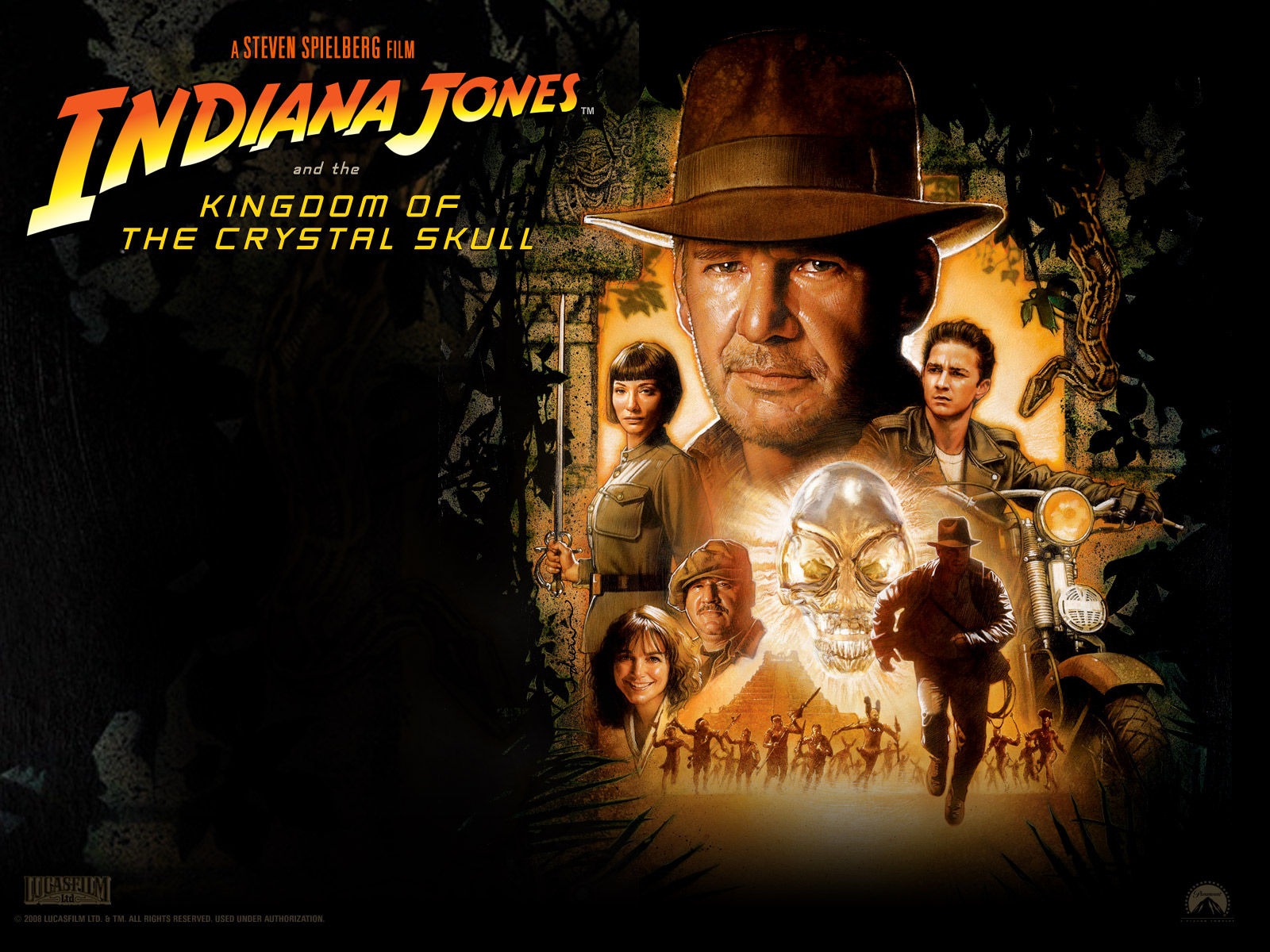
Of course, being disappointed is something that does still crop up in life; I was disappointed when my long-term relationship ended, I was disappointed when I found out how much post-graduate training costs, I was disappointed when I saw Indiana Jones and the Kingdom of the Crystal Skull. All these events were very disappointing, but nothing hurt more than those long hours I wasted watching that Indiana Jones sequel, where I spent almost the entire time in the cinema thinking: “Aliens! This had better not be about bloody aliens. OHGAWDIT’SABOUTALIENS.” It was so traumatic that I vowed then and there to never watch it again. I even considered trying to find somewhere I could hide, somewhere this terrible film wouldn’t be able find me. (I’m lying, of course, the breakup was the worst; when that happened, I felt like I was full of shattered glass; it coursed through my veins, cutting through me, every breath hurt, but I digress.)

In journalism, you must expect disappointment. You will not always get that interview you’ve been trying to secure for months, you might get passed over for a promotion, you might find that your work somehow gets published without your byline, and of course, you won’t always get to write about the things that you want to write about. You might get yourself an internship or secure a place of a work experience programme that doesn’t lead anywhere, but remember, it’s all part of the learning process. After I had a particularly disappointing internship last year, that turned out to not only be very expensive, but also pretty dull as the journalists there were reluctant to give me any work to do, a former friend of mine snapped, “Oh, you had one bad internship, get over it.”

As dismissive and as unhelpful as her remark was, it got me thinking about the nature of disappointment, especially in the journalism industry. Trying to avoid the inevitable crushing pain of disappointment is useless; it’s going to happen at some point in your journalism career, so learn to roll with the punches. A few months ago, I wrote about rejection in journalism, something which even the best journalists in the world admit happens to them too. Don’t simply attempt to get over it; get angry, channel that anger into something positive, there is no point bearing grudges against people or publications. Don’t waste your anger on others, they don’t deserve it. Use it to better yourself, and change your feelings of disappointment into something much more useful; belief.

Journalism is a competitive industry, an evolving industry, but one that has so much potential for the next generation of journalists.=, and there will be a place for you in it.

Believe in yourself. Don’t give up.

Trash and The Quest for Higher Education

3 Feb
Journalism Postgraduate

Postgraduate Prospectuses

I graduated in 2009, after spending four years at a pretty chaotic university in Scotland. At the time, I was glad to escape and happy to get away from the university’s inability to return essays on time, their refusal to listen to student feedback, and most importantly, their desire to shut down the drama department of which I was a student. A department which had, at one point, been one of the leading drama departments in the country, and had helped the university gain conservatoire status. But that’s another story.

Since I graduated, I’ve achieved a lot; my writing has improved, I’ve written for a number of publications, I’ve worked as an editor, I’ve got a good ‘day job’, I’ve bought a flat, and I’m paying off my student loan. But I am struggling to get regular paid journalism work, and I can’t afford to take time off my ‘day job’ in order to take unpaid ‘editorial work experience’ that sees me making coffee, doing menial tasks, or worse, being ignored.

Since last year, I have been considering going back to university to do a postgraduate course in journalism. I know many people who have, and all of them are doing well; they work for big publications, they are establishing themselves in their field, and some of them are even moving abroad to further their careers. For me, I’m now at the point in my career where I have to make this decision; at the moment, I am still doing a lot of unpaid work, and I have a strong portfolio, yet when I have applied for journalism jobs, I have never even managed to get feedback on my application, let alone secure an interview.

I suspect this is because my degree is, to all intents and purposes, a drama degree, although I specialised in arts journalism in my final two years, I feel that potential employers are looking at the words ‘BA (Hons) Drama and Theatre Arts’ and throwing my CV in the bin. My lack of journalism qualifications is counting against me, despite my experience in the industry, but it’s time to face facts, I need to have a journalism qualification in order to progress.

However, postgraduate degrees, lest we forget, are expensive in the UK, disproportionately so, compared to fees in Europe and the system seems to be tailored towards attracting international students, as opposed to teaching domestic ones. Support for postgraduates is also low, and a recent report has revealed that 1,000 postgraduate students turn down places at Oxford University each year, because of the ‘financial demands of study there’. It’s ridiculous how expensive it is to study in the UK; some universities will change £6,000+ for a journalism postgrad, while others will charge more than £9,000 – and that’s just for fees, if you factor in basic living expenses, such as food and rent, then the average postgrad student is paying a lot of money for the privilege of further education.

So, last week, instead of doing my usual and just thinking about doing a postgrad, I made a decision. I went to a postgraduate fair organised by Target Courses at the University of Edinburgh, to see what I could do, and spoke to various people about my options, both financial and otherwise. To my surprise, the whole afternoon was very positive. The representative I spoke to from SAAS (Student Awards Agency for Scotland) which handles fees and loans, was very helpful, and while they can only offer loans towards part of the cost of postgraduate degrees, they took me through the specifics of the loan and explained everything clearly.

I also spoke to a number of university representatives, including those from Napier, Glasgow Caledonian, University of Salford, Manchester, UCD College of Arts and Celtic Studies, Study Options, Strathclyde University and the Fulbright Commission. Some of these conversations were very helpful, very positive and friendly, whereas others, weren’t. Just a quick heads up to anyone representing a university at a fair – answering questions with “Well, if you go to our website…” isn’t helpful, it’s lazy. I’ve spent time researching your courses, I’ve spent countless hours on many university websites – which aren’t always easy to navigate – and I’ve come with a list of questions, so the very least you can do is be prepared. Although, I had to laugh when I approached the ‘Study in Germany’ stand, just out of curiosity, because I didn’t know if it was an English-language college they were representing, and asked about their courses. The woman manning the stall paused, blinked slowly, and answered, “Are you German?” Whether she meant to say, “Do you speak German?”, I’ll never know, because the conversation quickly descended into farce from there, as she told me several times that I would need to speak German in order to study in Germany, gave me a website address, and sent me on my way with the most patronising of smiles. So, it wasn’t an English language college, then.

The people who were willing to talk to me, and had answers to my questions made me feel like going back to university is something I can do; of course, I’m still trying to figure out which universities, which courses, and most importantly, how I will pay the fees, but it doesn’t feel like an impossible task any more. Yes, the fees are too much, we shouldn’t have to pay in order to better ourselves through education, and further education shouldn’t be a luxury for the rich and the well-connected, but I’ll be damned if I’ll let that stop me.

Have you done a journalism postgrad? Are you thinking about it? Or are you determined to do it, like me? Got any advice? Get in touch, let’s talk.

Journalists, Watch Your Language

19 Jan

Rosie DiManno

As ledes go, Toronto Star columnist Rosie DiManno’s “She lost a womb but gained a penis” is pretty awful; it’s sensationalist, unclear, and laughably insensitive. However, the next sentence, “The Former was being removed surgically – full hysterectomy – while the latter was being shoved into her slack mouth” reveals just how inappropriate the lede is for the story.

Yet as horrible as these sentences are, the story itself is much, much worse: an anesthesiologist, Dr George Doodnaught, is currently standing trial accused of sexually assaulting 20 female patients whilst they were unconscious during surgery in Toronto’s North York General Hospital. The crimes that Dr Doodnaught has been accused of are abhorrent, shocking and inexcusable; oral rape, forcible touching of the breasts and ‘French kissing’ one patient while she was having hip replacement surgery.

Clearly, the story is one of a trusted medical professional abusing their position in order to exploit vulnerable female patients for his own sexual fulfilment, and the failure of North York General Hospital to protect its patients by investigating previous complaints against Dr Doodnaught. However, DiManno’s clumsy wording, which included describing one anonymous witness, known as D.D. as an “…attractive married mom” – are her looks, marital status and children relevant to the case? – Switch the reader’s anger from Dr Doodnaught to DiManno herself, crushing the real horror of the story and creating a different, and much more vitriolic kind of outrage.

Whether DiManno intended to sound ‘edgy’, or dramatic, or she was simply having an ‘off day’ remains to be seen. However, this isn’t her first questionable lede: in a piece published earlier this month on the disgraced cyclist Lance Armstrong, DiManno gleefully cried: “Give Lance Armstrong this much: The guy’s got, um, ball.”  Jokes about Armstrong’s anatomy and integrity aside, journalists, whether they’re writing a column or a news story, have a responsibility to write objectively, and in the case of writing about sexual assault with care and compassion.

However, as recent articles, such as THAT Julie Burchill article, and the furore surrounding Suzanne Moore have revealed, words have power, they can be simultaneously uplifting, informative, destructive and damaging. Burchill’s dismissal of transsexuals as ‘trannies’ amongst other hateful words and Moore’s angry tweets on transsexuals and feminism serve only to make people angry, and further feel alienated. Whereas DiManno’s over simplified description of oral rape as “…gaining a penis” minimises one woman’s horrific tale of sexual assault. After all, would you ever say to a rape victim, “Hey, don’t worry about it, remember, you weren’t horribly violated, you gained a penis”? No, you wouldn’t, because that’s not what rape is.

Words carry so much weight, they influence and teach the reader. So when DiManno describes oral rape in the way she has, when Burchill dismisses transsexuals as “chicks in dicks clothing”, when a 12-year-old gang rape victim in Texas is described by a defence attorney as a “spider”, “who lured the boys into her web” and when the gang rape of two 12-year-old girls in Reading is described by a “park orgy” and the victims as “schoolgirl Lolitas” then we have a serious problem. Not just in journalism, but also in society in general.

Words move worlds, they have the power to enlighten, destroy and corrupt, and it’s time to face the reality that what we say and write can move people in all the wrong ways.

The ‘This is Not a Best of List’ Film List of 2012

3 Jan

Films of 2012

I have a confession to make. Actually, I have two confessions to make. First of all, I hate these ‘Best of 2012’ lists that have been popping up everywhere since mid November. I find, for me, that they get very tiresome very quickly; especially if they are published before the end of the year; Christmas isn’t the only thing that happens in December, lest we forget.

My second confession is about the films themselves. The truth is, when I sat down to write this list, I realised that while I had seen lots of films in 2012, they were either new, and as yet, unreleased films shown at festivals, or they were one-off screenings of classic films that I hadn’t seen before, so they weren’t exactly ‘new releases’.

So after much thought, here is my ‘not a list, don’t call it a list’ of my three favourite films of last year.

The Shining (1980)

Ok, I know that Stanley Kubrick’s 1980 film adaptation Stephen King’s most famous novel, The Shining, isn’t a brand new piece of cinema, but the release of the extended US cut of the film in the UK in November brought a new dimension to Kubrick’s cult horror. While the US cut, which features an extra 24 minutes of footage, which were omitted from the European release, wasn’t Kubrick’s favourite version of the film, this cut brings something else to the familiar plot. Initially ignored and misunderstood upon its release for its ‘Art House’ style, and also due to Kubrick’s many changes to King’s story – which King didn’t approve of – The Shining has now become a right of passage for almost every film fanatic.

Featuring Jack Nicholson’s infamous turn as the out-of-luck writer with a dark past, this film showcases both Nicholson’s performance and Kubrick’s ability to create real, lasting tension and unease. In part, King’s tale of a haunted hotel and the evil of the spirits contained within, The Shining is also a piece that explores a family at breaking point, and analyses the effects of isolation whilst delving into the more extreme aspects of mental illness. Intriguing, masterful and still chilling more than 30 years after its original release, the extended version of the film is an unforgettable piece of late 20th century horror cinema.

You can read my review of the film on TVBomb.

Prometheus (2012)

Ridley Scott’s long-awaited addition to his Alien franchise, Prometheus was released to great fanfare in June, and quickly split the critics and the viewing public. Featuring an all-star cast, the film was initially marketed as a prequel to Scott’s highly influential 1979 sci-fi horror, however, Prometheus, while featuring terrifying creatures like ones featured in the original film, was designed to be a companion film, and not a prequel.

Although the film came under some harsh criticism for its somewhat unexpected back story, and a few other plot points – Guy Pearce’s make up, anyone? – Prometheus is, at its heart, a film that’s less about sci-fi and more about horror. Exploring Alien‘s existing themes of body horror, gender, and perhaps, most importantly, of violence, rape and unwanted pregnancy, Prometheus is concerned with humanity, and our fears. It taps into our most basic terrors; the fear that we are not alone, that our bodies are not our own, and that we are powerless and important when compared to the vastness of the universe.

Best viewed as a companion film to Alien, rather than a direct relation, the thing to remember about Prometheus is that while it can’t emulate the shock  created by or be the game changer that Alien was, it doesn’t have to, it’s concerned with deeper things.

You can read my review of the film on TVBomb.

Killer Joe (2012)

When I saw Killer Joe at the 2012 Edinburgh International Film Festival, I couldn’t speak properly for a few minutes. I hate writing in clichés, but William Friedkin’s film adaptation of Tracy Letts’ 1993 play of the same name does everything film is meant to do. It entertains, it unnerves, it terrifies, it shocks and, most importantly, it gets into your head and stays there. A tale of a dysfunctional family hiring a contract killer that they can’t afford – the ‘Killer Joe’ of the title, expertly realised by Matthew McConaughey – to kill their mother for her life insurance takes the viewer on a number of twists and turns throughout. But the real power of the film lies in its overarching theme of exploitation, and of course, the film’s final scenes, which culminate in an explosion of violence so unexpected and so frightening, that they really has to be seen to be believed.

A true return to form after Friedkin’s last few films, Killer Joe was not only one of the highlights of the Edinburgh International Film Festival, but also one of the strongest new releases of the year. For me, this tale of contract killings, exploitation, selfishness and greed is perfectly realised and completely and utterly disturbing. A must see.

You can read my review of the film here.

KNUT

DIY or DIE

Deeply Fascinating

Thoughts on contemporary performance

Lili La Scala

a collection of words and pictures

The Arabic Apprentice

A native English speaker's attempts to master Arabic

Stroppy Editor

Minding other people’s language. A lot.

Keren Nicol

Thoughts from an arts marketer living in in Scotland. Not always about arts marketing

EYELASHROAMING

A blog by Ashleigh Young

monica byrne

novelist . playwright . screenwriter

CaptainAwkward.com

Don't need to be cool to be kind.

Benjamin Studebaker

Yet Another Attempt to Make the World a Better Place by Writing Things

Thao Votang

fiction author

Annalisa Barbieri

Writer and broadcaster

The FlavNav

Navigating my way around the world to get my life back